
MS Weldmesh — Mild Steel Welded Wire Mesh Manufacturer & Supplier in India
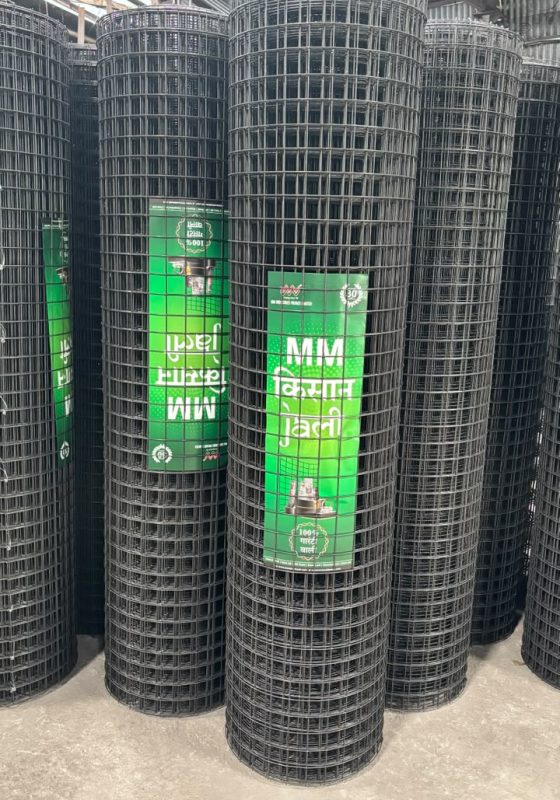
MS Weldmesh is a welded wire fabric made from uncoated mild steel wire. Longitudinal and transverse wires are resistance-welded at each intersection to create a rigid square or oblong grid. Since 1995, MM Industries has produced MS Weldmesh at its Raipur plant, supplying construction companies, EPC contractors, precast yards, industrial plants, and government departments throughout Chhattisgarh, Madhya Pradesh, Odisha, and across India.
The material itself is simple, but project issues often arise from incorrect specifications. Mild steel welded wire mesh made to IS 4948 is a general-purpose fabric. In contrast, welded fabric designed to carry design loads in concrete is governed by IS 1566 and made from hard-drawn wire, not mild steel. Confusing these products can result in mesh that works for crack control but fails as reinforcement. This page clarifies the distinction and provides specifications, comparisons, and procurement guidelines to help you purchase the correct product.
For an overview of the full product range, including GI, stainless, gabion, and fencing grades, please refer to the welded wire mesh pillar page.
Quick Facts — MS Weldmesh at a Glance
| Parameter | Detail |
| Product | MS Weldmesh (Mild Steel Welded Wire Mesh / MS Welded Wire Fabric) |
| Base material | Uncoated mild steel wire drawn from low-carbon wire rod |
| Wire standard | IS 280 — Mild steel wire for general engineering purposes |
| Fabric standard | IS 4948 — Welded steel wire fabric for general use |
| Not covered by | IS 1566 (hard-drawn steel wire fabric for concrete reinforcement) |
| Weld method | Electric resistance welding at every intersection |
| Wire diameter range | 1.6 mm – 4.0 mm |
| Mesh aperture range | 25 × 25 mm – 150 × 150 mm, square and oblong |
| Standard width | Up to 6.6 ft (≈2,000 mm) |
| Supply form | Flat panels/sheets and rolls, cut to project length |
| Surface finish | Bright/black uncoated; painting, phosphating or galvanising available on request |
| Weld shear (IS 4948) | Minimum average not less than 21 kg/mm² on longitudinal wire area |
| Mesh tolerance (IS 4948) | ±5% centre-to-centre in any individual mesh |
| Typical applications | Crack control in screeds and industrial floors, plaster mesh, guniting, precast, fencing panels, safety guards, cages, fabrication |
| Manufacturer | MM Industries Pvt. Ltd., Raipur, Chhattisgarh — since 1995 |
| Supply capability | Bulk, customised sizes, pan-India dispatch, dealer network |
What is MS Weldmesh?
MS Weldmesh is a prefabricated steel grid produced by resistance-welding uncoated mild steel wires at each intersection, with longitudinal and transverse wires positioned at right angles. “MS” refers to mild steel, a low-carbon steel wire conforming to IS 280, and distinguishes this product from GI and stainless steel grades. The fabric form is defined in IS 4948, Welded Steel Wire Fabric for General Use.
An MS weldmesh specification requires three elements. A purchase order missing any of these is incomplete:
- Wire diameter, specified separately for longitudinal and transverse wires if they differ.
- Mesh size, measured centre-to-centre between adjacent wires in both directions.
- Panel or roll dimensions, including width and length.
IS 4948 requires the purchaser, not the manufacturer, to specify these three items. The standard does not set default mesh or wire sizes; the fabric is produced according to the buyer’s specifications. As a result, two quotes for “1×1 inch weldmesh” may differ by up to 30% in weight and still be accurate.
What “mild steel” actually means here
Mild steel wire under IS 280 is a low-carbon steel, with carbon content limited to approximately 0.20–0.25% depending on the class, and specified limits for manganese, sulphur, and phosphorus. It is produced by drawing hot-rolled wire rod through successive dies to achieve the final diameter. The resulting wire is ductile, weldable, easy to bend on site, and cost-effective compared to alternatives.
However, mild steel wire is not high-strength. Unlike hard-drawn reinforcement wire, it does not have a specified 0.2% proof stress and is not zinc-coated. These factors significantly affect its appropriate applications, which will be discussed in the next section.
IS 280 is now subject to a mandatory BIS Quality Control Order. Mild steel wire sold in India must carry the ISI mark under a valid BIS licence and be accompanied by a test certificate for each consignment. This requirement applies to the wire input, and it is reasonable to request evidence of compliance from any weldmesh supplier.
Key Takeaways
- MS weldmesh refers to uncoated mild steel wire, resistance-welded into a grid, using IS 280 wire and IS 4948 fabric.
- A complete specification requires wire diameter in both directions, mesh size measured centre to centre, and panel size.
- Mild steel is ductile and economical, but it is neither high-strength nor corrosion-resistant.
- Request the wire mill test certificate and BIS licence details, not just the mesh invoice.
How Weldmesh is Manufactured?
Weldmesh quality is determined well before welding begins. Our Raipur plant follows an eight-stage process.
- Wire rod selection. Production begins with low-carbon steel wire rod, typically 5.5 mm, sourced with test certificates. Low carbon content ensures the drawn wire remains weldable and ductile.
- Wire drawing. The rod is cold-drawn through dies to achieve the target diameter, typically between 1.6 mm and 4 mm. This process increases tensile strength beyond that of the original rod. Diameter is monitored continuously, as undersized wire does not meet strength or weight specifications.
- Straightening and cutting. For panels, drawn wire is straightened and cut to length for line and cross wires. For rolls, line wire is fed continuously from spools.
- Resistance welding. Cross wires drop onto the line wires at the set pitch. Electrodes clamp each intersection and pass a controlled current pulse. Current, pressure, and weld time are set per wire diameter; too little current gives a cold joint that snaps under shear, too much burns the wire section down at the weld.
- Mesh formation. Automatic feeders index the mesh forward one pitch at a time, so aperture accuracy is machine-governed, not operator-dependent.
- Quality inspection. Sample intersections undergo shear testing. Aperture, diagonal squareness, and flatness are measured against specified tolerances. Wire diameter is re-verified on the finished mesh.
- Surface finishing. GI weldmesh is produced from GI-coated wire, zinc-coated according to IS 4826 before welding. Weld current and time are set by gauge to maintain coating integrity at each joint. PVC coating, if specified, is applied over the GI wire.
- Cutting and packaging. Panels are cut to sheet size and strapped in bundles; rolls are compacted and wrapped for transport.
Key takeaways: Cold drawing sets wire strength; weld parameters set joint strength; GI protection comes from the coated wire, so the wire’s zinc class decides outdoor life.
The Standards Boundary Every Buyer Must Understand
Many MS weldmesh resources overlook this section, which can lead to significant project costs.
IS 4948 covers welded steel wire fabric for general use. Its own scope clause names the applications it is written for — fencing, window grills, crates — and states explicitly that it is not intended to cover welded wire fabric for concrete reinforcement, directing the reader to IS 1566 instead. Material for IS 4948 fabric is mild steel wire to IS 280, or stainless wire to IS 6528.
IS 1566 covers hard-drawn steel wire fabric for concrete reinforcement. It uses a different wire, is governed by a separate committee, and serves a distinct purpose. The fabric is made from hard-drawn steel wire with a minimum 0.2% proof stress of 480 MPa. The standard specifies square and oblong types, along with a designation system for ordering. An amendment allows purchasers to require certification that each welded intersection can withstand a shear load of at least one quarter of the load calculated from the specified proof stress of the smaller intersecting wire.
In summary:
Title | Welded steel wire fabric for general use | Hard-drawn steel wire fabric for concrete reinforcement |
Wire | Mild steel to IS 280 (or stainless to IS 6528) | Hard-drawn steel wire, min 0.2% proof stress 480 MPa |
Strength basis | Tensile strength of the wire; no design proof stress | Specified proof stress usable in RCC design |
Weld requirement | Weld shear min avg ≥ 21 kg/mm² on longitudinal wire area | Weld shear tied to a proportion of wire proof-stress load |
Intended for | Fencing, grills, crates, general fabrication | Structural concrete reinforcement |
Structural design use | No | Yes |
Can MS weldmesh be used in concrete applications?
Yes, it is used regularly. The key distinction is between reinforcement designed to carry structural loads and fabric intended for crack control.
MS weldmesh is a reliable and conventional choice for the following applications:
- Crack-control mesh in floor screeds and toppings
- Anti-crack mesh at wall and column junctions, and over service chases
- Plaster and render reinforcement, including over dissimilar substrates
- Guniting and shotcrete backing, where the mesh holds the applied layer and distributes shrinkage
- Blinding, PCC, and non-structural infill slabs
- Reinforcement for precast panel handling and secondary mesh
- Waterproofing membrane and screed reinforcement
MS weldmesh should not be used as a substitute for the following:
- Main reinforcement in structural slabs, beams, columns, footings or rafts
- Any application specified as fabric to IS 1566 or designed for a specific proof stress
- Any element where the structural drawing assigns a design steel area to the mesh
If a structural consultant specifies welded fabric, use IS 1566 fabric made from hard-drawn wire, not MS weldmesh. Substituting a lower grade should be addressed through a written technical query to the consultant, not handled by the purchasing department.
MM Industries is clear on this point because supplying general-purpose mesh for a structural requirement creates liability for all parties involved.
Key Takeaways
- IS 4948 explicitly excludes concrete reinforcement and points to IS 1566.
- IS 1566 fabric uses hard-drawn wire with a minimum proof stress of 480 MPa, which MS weldmesh does not meet.
- MS weldmesh is suitable for crack control, screeds, plaster, guniting, and other non-structural applications.
- MS weldmesh should not be used when a drawing specifies a design steel area for the mesh.
- If a drawing specifies “welded fabric to IS 1566,” provide a quotation for IS 1566 fabric.
How MM Industries Manufactures MS Weldmesh?
The standard weldmesh production process is detailed on the welded wire mesh page. The following outlines the differences when producing mild steel instead of galvanised mesh.
Wire procurement. MM Industries sources drawn mild steel wire from established manufacturers, with each batch supported by mill test certificates. This is a strategic choice: wire drawing and mesh welding require different expertise, and purchasing from specialized mills ensures more consistent quality than operating a small in-house drawing line.
Our specifications to the wire supplier are as important as the welding process itself. Carbon content directly affects weldability: excessive carbon makes welds brittle and prone to cracking, while insufficient carbon reduces fabric stiffness. We specify chemistry and mechanical properties according to IS 280, with each consignment verified accordingly.
Incoming inspection. Each coil is inspected upon receipt before entering the welding line. Diameter is measured at multiple points, surface condition is checked for rust, scale, and drawing defects, and the mill test certificate is reviewed against the purchase specification. Coils that do not meet requirements are rejected immediately. Since the wire is purchased rather than drawn in-house, this inspection is especially critical.
Line setup. Longitudinal wires are fed from spools onto the welding line at the specified pitch, while transverse wires are placed at their designated intervals. IS 4948 requires assembly using automatic machines or equivalent mechanical methods to maintain spacing and alignment within tolerance.
Resistance welding. Each intersection is welded by passing current through the crossing point under electrode pressure, without filler or flux. Current, weld time, and electrode force are set for each wire-diameter combination. This step is critical for ensuring panels withstand transport and site handling, and is often where lower-quality mesh fails.
Cutting, edge finishing, bundling. Panels are sheared to length, edges are trimmed, and flat sheets are bundled. IS 4948 limits each bundle to 150 sheets. Rolls are secured to prevent unwinding and telescoping during transit.
The key difference for mild steel: there is no coating line. At MM Industries, GI weldmesh is produced from wire that is pre-coated with zinc before welding; the plant does not hot-dip galvanise finished panels. MS weldmesh is shipped bare, without any coating. IS 4948 requires the finished fabric to be clean and free of rust, mill scale, dirt, and oil, and permits anti-corrosive treatments such as pickling and painting, phosphating and painting, or hot-dip galvanising only if requested by the purchaser. If your MS panels will be exposed to harsh conditions, specify the required treatment at the time of order. For a detailed comparison, refer to the GI weldmesh page.
In-process quality control
Incoming wire diameter | Micrometer | Every coil on receipt, several points along the coil |
Wire spacing and mesh size | Vernier caliper | Max variation between two members, centre to centre, not more than 5% |
Sheet / roll size | Measuring tape | Length may vary by 25 mm or 1%, whichever is greater |
Weld shear strength | UTM with anti-rotation fixture, load applied to longitudinal wire | Min average not less than 21 kg/mm²; one test per 30,000 m² of fabric |
Tensile strength, bend, elongation | Mill test certificate, verified on the supplied wire before fabrication | One test each per 10 coils or part thereof |
Tensile / bend on fabric | Test on finished fabric | One test each per 7,000 m² |
Note the weld shear exemption in IS 4948: if the diameter difference between longitudinal and transverse wires exceeds 2 mm, the fabric is exempt from the weld shear test. Buyers ordering heavily oblong fabric should be aware of this before including a weld-shear clause in the purchase order.
Key Takeaways
- MM Industries buys drawn mild steel wire from established wire manufacturers against mill test certificates, and inspects every coil on receipt.
- MS weldmesh production is identical to GI up to the point of coating, which MS simply omits.
- MM Industries applies zinc coating to wire before welding for GI; there is no post-weld galvanising line.
- Weld quality is set by current, time and electrode force per diameter combination.
- IS 4948 fixes the test regime: mesh ±5%, length 25 mm or 1%, weld shear ≥21 kg/mm².
Technical Specifications
MM Industries MS Weldmesh production range
|
Wire diameter |
1.6 mm – 4.0 mm |
|
Mesh aperture (square) |
25 × 25 mm to 150 × 150 mm |
|
Mesh aperture (oblong) |
Made to order, e.g. 75 × 25 mm, 100 × 50 mm |
|
Panel width |
Up to 6.6 ft (≈2,000 mm) |
|
Panel / roll length |
Cut to project requirement |
|
Material |
Mild steel wire to IS 280 |
|
Fabric specification |
IS 4948 |
|
Finish |
Uncoated; painted, phosphated or galvanised on request |
|
Supply form |
Flat panels, sheets, rolls |
|
Customisation |
Non-standard apertures, mixed longitudinal/transverse diameters, project-specific panel sizes |
Standard mesh and wire combinations
IS 4948 specifies the standard square and oblong mesh combinations produced in India. Using these options reduces lead times and improves pricing. MM Industries supplies mesh with wire diameters up to 4.0 mm, as shown in the middle column. The right-hand column lists heavier combinations included in the standard but beyond our manufacturing capacity.
Square mesh (nominal pitch × wire diameter each way)
|
Pitch (mm) |
Wire diameters manufactured by MM Industries (mm) |
Also in IS 4948, above our 4.0 mm ceiling |
|
15 |
1.60 |
— |
|
20 |
2.00, 2.50, 3.15 |
— |
|
25 |
2.00, 2.50, 3.15 |
— |
|
37 |
2.50, 3.15 |
— |
|
50 |
2.50, 3.15, 3.55, 4.00 |
4.50 |
|
75 |
2.50, 3.15, 3.55, 4.00 |
4.50, 5.00, 5.60 |
Oblong mesh (longitudinal × transverse pitch)
|
Pitch (mm) |
Wire diameters manufactured by MM Industries (mm) |
Also in IS 4948, above our 4.0 mm ceiling |
|
50 × 25 |
2.50, 3.15, 3.55, 4.00 (equal both ways) |
4.50 |
|
75 × 25 |
3.15, 3.55, 4.00 (equal both ways) |
4.50, 5.00; also 5.00 long. / 3.15 trans. |
|
75 × 50 |
3.15, 3.55, 4.00 (equal both ways) |
4.50, 5.00, 5.60; also 5.00/3.15, 5.60/3.15, 5.60/3.55 |
We manufacture non-standard apertures within the 1.6–4.0 mm wire range to order, subject to lead time, minimum quantity, and adjusted pricing. Requests for wire above 4.0 mm exceed our production capabilities, and we will inform you rather than provide a quote.
Working out weight
MS weldmesh is traded by weight, making accurate weight calculation essential. For rectangular mesh:
kg/m² = (d² / 162) × (1/P₁ + 1/P₂) × 1.127
where d is wire diameter in mm and P₁, P₂ are the two pitches in metres.
Worked example: 50 × 50 mm mesh, 3.15 mm wire. d²/162 = 9.9225/162 = 0.06125 1/0.05 + 1/0.05 = 40 0.06125 × 40 × 1.127 = 2.76 kg/m²
A 2.44 m ×A 2.44 m × 6.00 m panel with this specification weighs approximately 40.4 kg. Please use the calculator to compare your own combinations. Note that two vendors quoting the same “rate per kg” for different wire diameters are not offering the same price.
Key Takeaways
- Specify wire diameter both ways, mesh size centre-to-centre, and panel dimensions. Nothing less is a spec.
- Sticking to IS 4948 Annex A combinations shortens lead time and sharpens price.
- Weight per m² is the honest basis of comparison, not rate per kg alone.
Sizes and Selection Guide
Selection is based on four key questions, addressed in sequence.
- What is the mesh’s purpose? Crack control requires closer spacing and finer wire. Load-spreading over a soft subgrade needs heavier wire. Safety guards require apertures small enough to block the intended object. Fencing infill should provide stiffness with minimal weight.
- What aperture is required? Aperture size determines subsequent choices. For crack control in screeds, use 50 × 50 mm to 100 × 100 mm. For plaster mesh, use 25 × 25 mm or finer. For guniting backing, IS 9012 sets a minimum spacing to allow material to pass through rather than rebound. Do not reduce aperture size to increase strength, as this will only increase rebound.
- What wire diameter is appropriate? Choose diameter based on both handling stiffness and strength. Wires below 2.5 mm may cause large panels to sag and lose spacing during installation. At 4.0 mm, panels are heavy enough to require two people for lapping, so plan panel size accordingly.
- What panel size is required? Match panel size to the bay so that laps occur at planned locations, not just at sheet ends. This adjustment can significantly reduce costs and is often overlooked.
Selection Matrix:
Application | Typical aperture | Typical wire | Notes |
Plaster / render reinforcement | 25 × 25 mm | 1.6 – 2.0 mm | Fix taut; overlap across substrate joints |
Screed and floor topping crack control | 50 × 50 – 100 × 100 mm | 2.5 – 4.0 mm | Position in upper third of the screed |
Industrial floor slab crack control | 100 × 100 mm | 3.15 – 4.0 mm | Support on chairs; do not hook up during pour |
Guniting / shotcrete backing | 50 × 50 mm and coarser | 2.5 – 4.0 mm | Maintain clearance from the substrate |
Precast secondary / handling mesh | 50 × 50 – 100 × 100 mm | 3.15 – 4.0 mm | Cage tolerance drives cover |
Fencing panel infill | 50 × 50 – 75 × 75 mm | 3.0 – 4.0 mm | Specify a coating or accept a repaint cycle |
Machine guards, cages, racking backs | 25 × 25 – 50 × 50 mm | 2.0 – 3.15 mm | Aperture set by what must not pass through |
Gabion / river training | — | Welded gabion is a separate specification |
Detailed size tables are available in the weldmesh sizes guide.
Engineering Advantages of MS Weldmesh
Fixed geometry. Machine-set spacing ensures consistent placement because every intersection is welded. The grid maintains its specified pitch when properly supported, unlike hand-tied mesh, which may shift.
Labour reduction. Crews installing prefabricated panels work significantly faster and require fewer skilled workers than those assembling individual bars. This efficiency offers a key commercial advantage for large areas such as warehouse floors, aprons, and hardstandings.
Predictable load distribution. A continuous welded grid distributes point loads and shrinkage stresses over a wider area than discrete bars of equivalent steel area. This improves crack control, even when the grid is not carrying a design load.
Weld integrity as a measurable property. Weld shear strength can be tested and specified, unlike tied intersections. Welded fabric also provides a verifiable quality record.
Low waste, clean site. Panels are delivered pre-cut, eliminating offcuts, bar-bending areas, and tying wire. Material reconciliation is straightforward.
Ductility and workability. Mild steel can be cold-bent without cracking. Panels may be trimmed, bent at edges, or formed to a radius on site using standard tools.
Cost. MS is the most economical weldmesh grade per kilogram. If environmental conditions do not require a coating, no additional expenditure is needed.
Limitations should also be noted. MS weldmesh lacks corrosion protection and will surface-rust within weeks of outdoor exposure. Its strength is not suitable for structural design. Once welded, a panel is rigid and cannot be conformed to complex curves as loose bars can.
Key Takeaways
- Machine-set spacing, fast placement, testable welds, minimal waste.
- No corrosion resistance, no design strength, limited formability.
- Best value where large flat areas need consistent, non-structural steel quickly.
Industry-Wise Applications
Building construction
MS weldmesh is widely used in Indian building projects for crack control and plaster reinforcement. It is applied in floor screeds, over service chases, at masonry-to-RCC junctions prone to differential movement cracks, and in non-structural topping slabs. For repair and retrofit work, it supports guniting and shotcrete layers. However, it does not replace designed reinforcement. Please refer to the section above for details.
Industrial flooring and warehousing
Welded fabric is especially effective for large-area floors. Installing a 5,000 m² warehouse floor with tied bars is slow, labor-intensive, and often results in inconsistent cover. Using welded mesh panels significantly reduces installation time and allows for verifiable spacing. This approach is standard in distribution centers, cold-storage facilities, factory bays, and workshop hardstandings.
Precast concrete
Precast yards use MS weldmesh as secondary and handling reinforcement in panels, boundary wall units, drain covers, kerbs, and elements adjacent to pavers. Its controlled geometry meets the strict cover tolerances required in precast production. Main reinforcement in precast elements must still be designed according to structural requirements.
Roads, bridges and infrastructure
Applications include crack-control mesh in service bays and approach slabs, mesh backing for shotcrete in slope stabilization and tunnel linings, protective mesh over culverts and drains, and temporary works adjacent to formwork. Guniting for canal lining and embankment protection is a long-standing use. For technical details, please refer to the weldmesh in guniting and shotcrete article.
Cement plants, steel plants and mining
Heavy industries use MS weldmesh for equipment guards, walkway infill, conveyor guarding, screening frames, cage fabrication, and refractory-anchoring mesh. In these abrasive environments, coatings often deteriorate quickly, so uncoated mesh with a regular maintenance repaint cycle is typically the most practical solution.
Fabrication and manufacturing
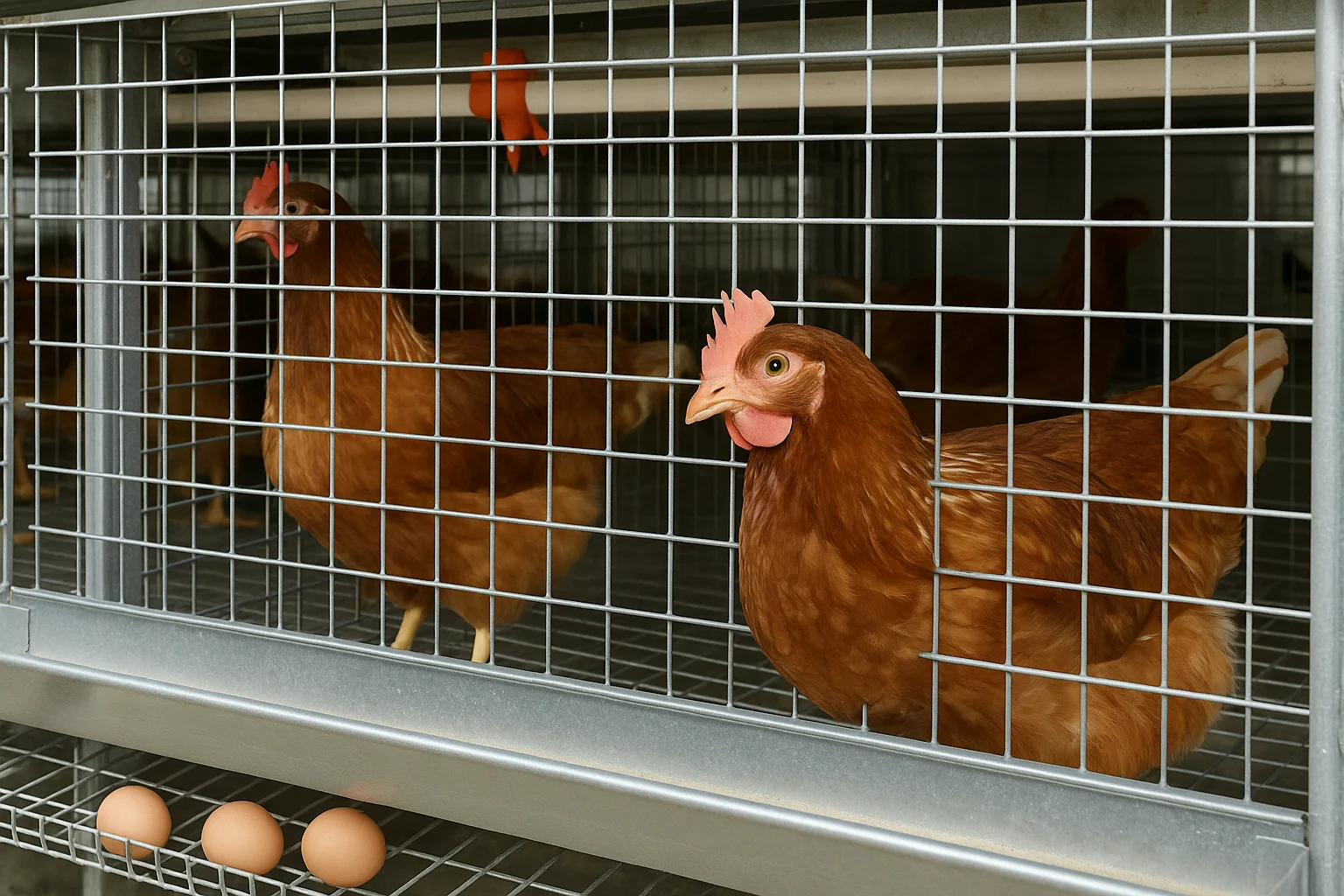
MS weldmesh is used for furniture frames, storage rack backs, poultry and animal enclosures, tree guards, tank guards, trolley and bin bodies, and general workshop fabrication. Mild steel is preferred because it welds and bends easily during fabrication.
Agriculture and boundary work
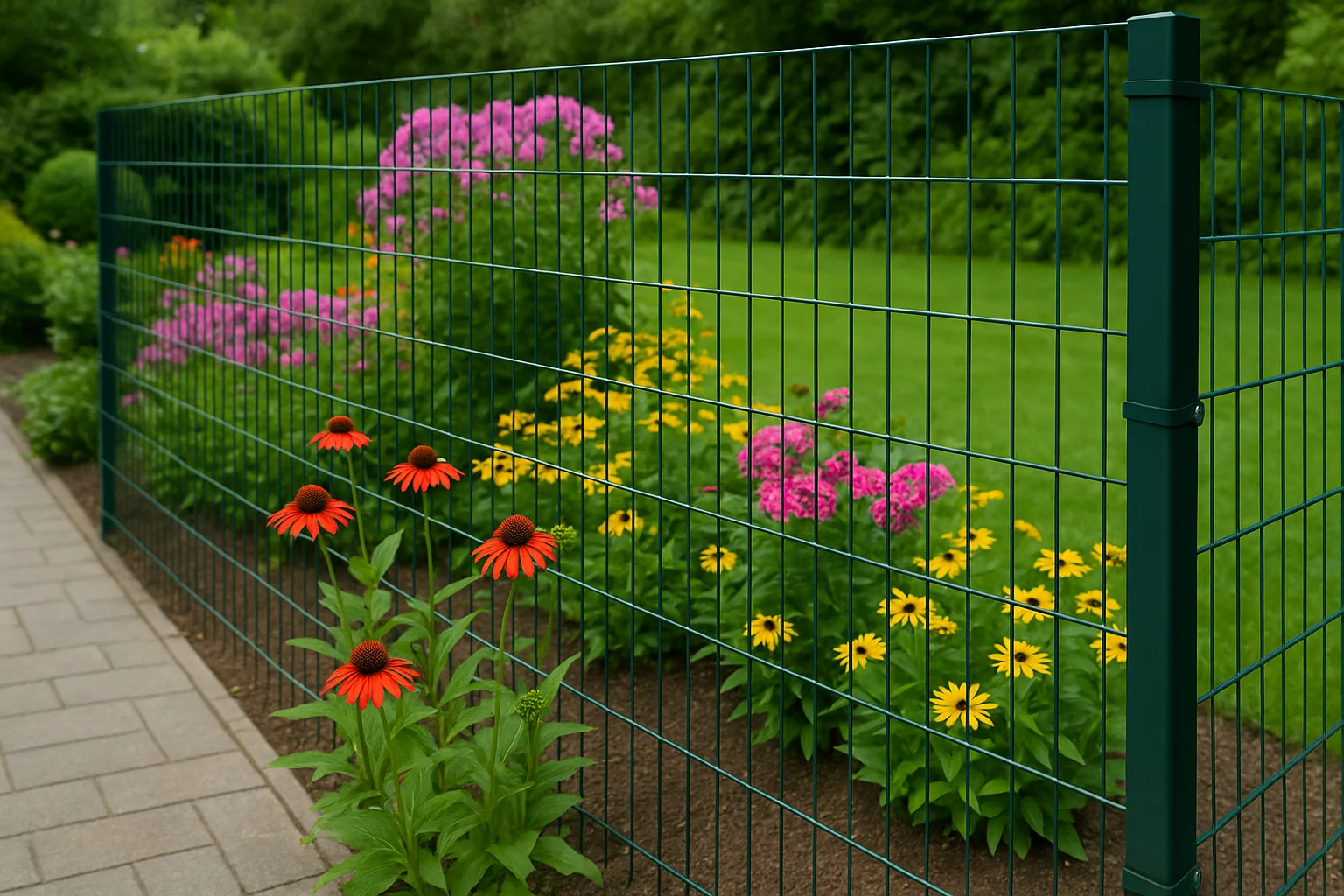
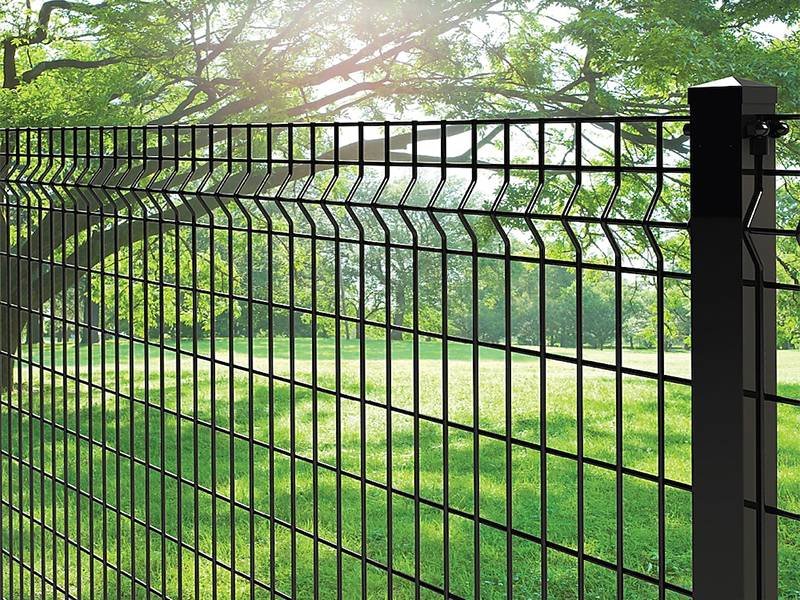
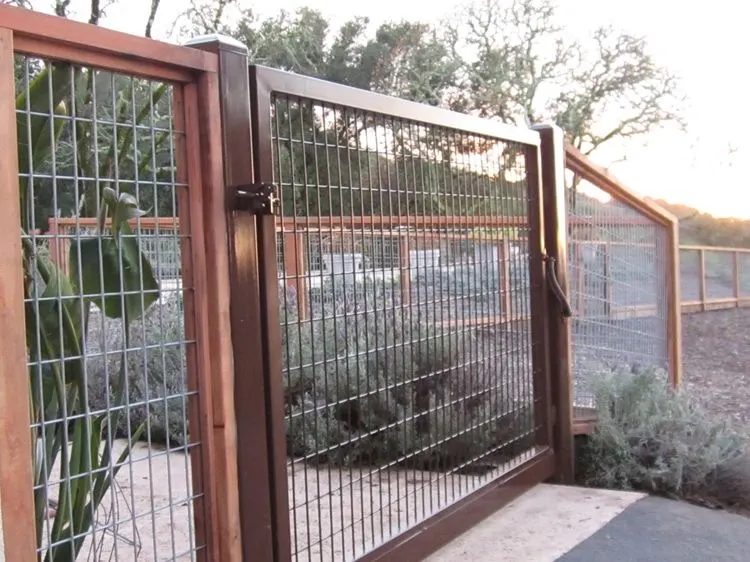
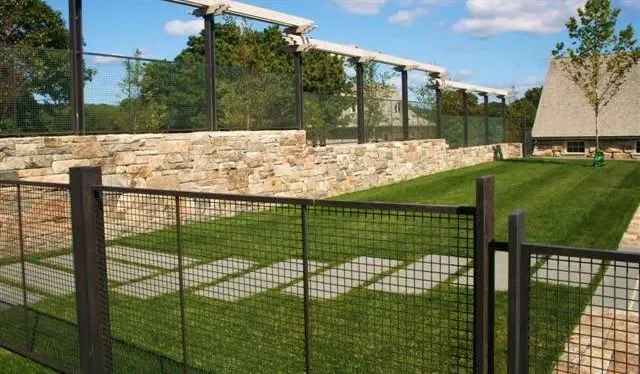
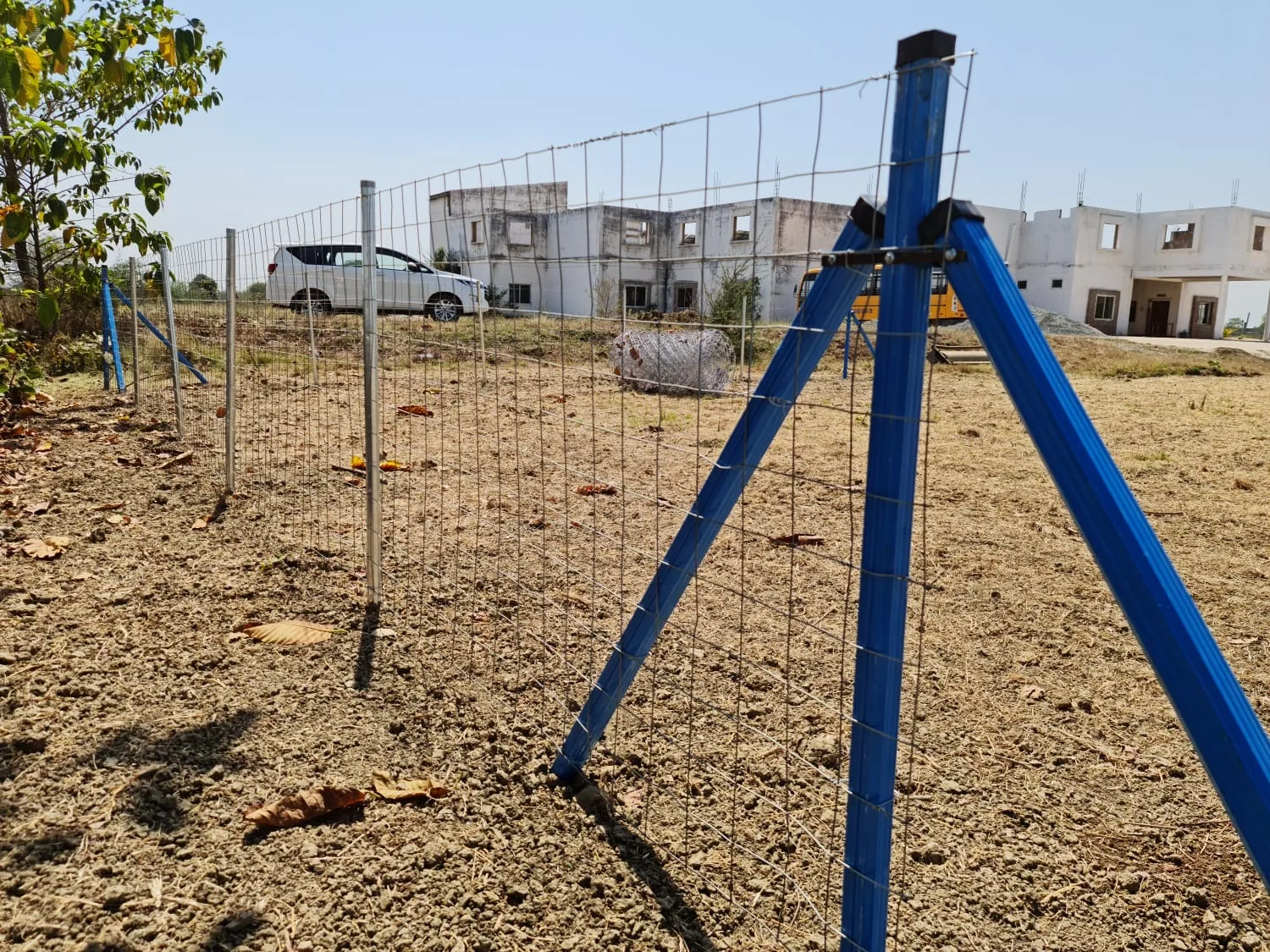
MS weldmesh panels are used as fencing infill and enclosure mesh where periodic painting is acceptable. For long-term outdoor fencing, GI weldmesh, chain-link fencing, or barbed wire are generally more cost-effective options.
Key Takeaways
- The largest volume use is for crack control in floors, screeds, and industrial slabs.
- The second most common use is as backing for guniting and shotcrete in repair, canal, and slope work.
- The third is for fabrication, guarding, and enclosure work in plants and workshops.
- For permanent outdoor exposure, GI weldmesh is recommended instead of MS.
Engineering Comparisons
MS Weldmesh vs GI Weldmesh
Parameter | MS Weldmesh | GI Weldmesh |
Material | Uncoated mild steel wire (IS 280) | Zinc-coated mild steel wire |
Coating | None as supplied | Zinc applied to the wire before welding at MM Industries |
Corrosion resistance | None. Surface rust within weeks outdoors | Substantial; service life set by coating mass and exposure |
Strength | Equivalent at equal diameter | Equivalent at equal diameter |
Weld appearance | Uniform | Small coating disturbance at weld nuggets is normal |
Cost per kg | Lowest | Typically 15–30% higher |
Maintenance | Painting cycle required outdoors | Minimal |
Service life indoors | Long | Long |
Service life outdoors | Short without treatment | Long |
Best for | Concealed, indoor, in-concrete, short-term or painted work | Exposed, humid, coastal, permanent installations |
Verdict: If the mesh will be embedded in concrete, used indoors, or regularly painted and maintained, MS is the most cost-effective choice and zinc coating is unnecessary. For outdoor or exposed applications, GI offers a lower whole-life cost, outperforming MS before a second repaint is needed. See the GI weldmesh page for full coating details.
MS Weldmesh vs TMT Bars
Parameter | MS Weldmesh | TMT Bars (IS 1786) |
Form | Prefabricated welded grid | Individual deformed bars |
Standard | IS 4948 (general use) | IS 1786 (high strength deformed) |
Design strength | Not usable in structural design | Fe 415 / 500 / 550 grades, fully designable |
Bond with concrete | Plain wire; mechanical anchorage via the welded grid | Ribbed surface, high bond |
Installation speed | Fast — roll out and lap | Slow — cut, bend, place, tie |
Labour | Low, semi-skilled | High, skilled bar benders |
Cost | Lower per kg | Higher per kg |
Corrosion resistance | None | None (unless CRS/epoxy) |
Best for | Crack control, screeds, guniting, non-structural | All designed structural reinforcement |
Verdict: These products serve different purposes, despite search results suggesting otherwise. TMT bars provide structural load-bearing capacity, while MS weldmesh is used for crack control. Both are often required in slab construction. Refer to the full comparison of weldmesh and TMT bars for more details.
MS Weldmesh vs Conventional Plain Rebar
Parameter | MS Weldmesh | Plain MS round bar |
Geometry control | Machine-set, welded | Depends on the bar bender |
Spacing accuracy | Within IS 4948 tolerance (±5%) | Site-dependent, commonly ±25 mm or worse |
Placement rate | High | Low |
Site waste | Near zero | Offcuts, tying wire, bending losses |
Flexibility on site | Limited — panels are rigid | High — bars go anywhere |
Complex geometry | Poor | Good |
Cost per kg | Comparable to slightly higher | Comparable to slightly lower |
Auditability | Weld shear testable, batch traceable | Bar-by-bar inspection |
Verdict: Mesh is preferred for flat, repetitive areas, while loose bars are better suited for congested, irregular, or detailed zones. Most projects use mesh in open areas and bars at edges and openings.
MS Weldmesh vs Hand-Tied Binding Steel
Parameter | MS Weldmesh | Hand-tied mesh (bars + binding wire) |
Intersection integrity | Resistance-welded, load-tested | Friction tie, no strength contribution |
Displacement under foot traffic and pouring | Minimal if supported | Common; ties slip and grids skew |
Labour hours per 100 m² | Low | High |
Consumables | None | Binding wire, cutters, labour |
Quality variability | Low, factory controlled | High, crew dependent |
Cost of material | Higher per kg | Lower per kg |
Cost installed | Usually lower | Usually higher once labour is loaded |
Best for | Repeatable large areas | Small patches, awkward geometry, repairs |
Verdict: Always compare installed costs rather than material costs. While binding-wire may appear less expensive in quotations, it often results in higher total costs due to additional labor, wastage, and rework. It remains practical for small quantities and irregular pours.
MS Weldmesh vs IS 1566 Welded Reinforcement Fabric
Parameter | MS Weldmesh (IS 4948) | Welded reinforcement fabric (IS 1566) |
Wire | Mild steel, IS 280 | Hard-drawn steel wire |
Proof stress | Not specified for design | Minimum 0.2% proof stress 480 MPa |
Governing standard scope | General use — fencing, grills, crates | Concrete reinforcement |
Weld shear requirement | Min average ≥ 21 kg/mm² on longitudinal wire area | Tied to a proportion of the wire’s proof-stress load; certificate available on purchaser’s request |
Designation system | Buyer specifies wire, mesh, panel size | Standard reference numbers per the standard’s appendix |
Use in structural design | Not permitted | Permitted |
Cost | Lower | Higher |
Best for | Crack control, screeds, plaster, guniting, fabrication | Designed slab, raft and pavement reinforcement |
Verdict: This is the most important comparison, though rarely discussed. If the drawing, BOQ, or specification references IS 1566, MS weldmesh cannot be substituted. If the drawing specifies “nominal mesh for crack control” without a required steel area, MS weldmesh to IS 4948 is the suitable and cost-effective option.
Key Takeaways
- MS versus GI is determined by exposure conditions, not by strength requirements.
- MS weldmesh and TMT bars are complementary products, not alternatives.
- Welded fabric is more cost-effective than hand-tied steel when considering installed cost, rather than material cost alone.
- IS 1566 fabric and IS 4948 fabric are distinct products and should not be substituted for one another.
When Should You Choose MS Weldmesh?
Select MS weldmesh if all of the following conditions are met:
- The mesh does not have a specified design steel area on the structural drawing.
- The final installation is within concrete, located indoors, or is painted and can be maintained.
- The area is sufficiently large, flat, and repetitive so that panel placement is more efficient than bar tying.
- Project scheduling constraints make labor savings more valuable than minor material cost reductions.
- The specification is silent on IS 1566, or explicitly nominates IS 4948 / general-purpose fabric.
Consider alternative options if any of the following apply:
If | Choose |
The drawing specifies fabric to IS 1566 or a proof stress | Hard-drawn reinforcement fabric |
The mesh carries design load | TMT bars to IS 1786, or IS 1566 fabric |
The mesh is permanently exposed to weather | |
The environment is coastal or chemically aggressive | Stainless or heavier zinc coating |
The geometry is curved, congested or irregular | Loose bars |
The application is boundary fencing over long runs | |
The application is gabion or river training |
Installation Best Practices
- Inspect the delivery against the purchase order before unloading. Measure wire diameter at three or four random points using a micrometer, mesh size centre-to-centre with a vernier, and panel dimensions with a tape. IS 4948 permits ±5% on mesh and 25 mm or 1% on length. Reject any panels exceeding these tolerances. Resolving discrepancies at the gate is much easier than after panels are cut.
- Store panels off the ground and keep them covered. Uncoated mild steel will rust if exposed to standing water or damp ground. Use dunnage, provide a slope for drainage, and cover with a tarpaulin.
- Plan lap length and position before placing the first panel. Laps should be coordinated with the bay layout, not improvised as panels are installed. For structural mesh, lap length must be determined by the consultant in accordance with IS 456, rather than relying on site conventions such as “one square.”
- Ensure the mesh is supported at the correct level. Crack-control mesh is ineffective if it rests on the subgrade during pouring. Use chairs or spacers spaced closely enough to prevent sagging, and verify the mesh level after the concrete crew has walked over it.
- Do not lift mesh during the pour. Raising mesh with a hook during pouring often results in inconsistent placement, with most mesh positioned too low and cover becoming unmeasurable.
- Maintain the specified cover. Uncoated wire with insufficient cover will corrode and cause surface spalling. Refer to the drawings for cover requirements, as specified under IS 456 for different exposure conditions.
- Stagger laps rather than aligning them in a single line. This prevents concentrated steel congestion and reduces the risk of a weak plane.
- Cut panels cleanly using bolt cutters or an angle grinder. Where the fabric is exposed after cutting, prime the cut ends. Bare steel at cut faces is highly susceptible to rust.
- Do not weld panels together on site to create larger panels. Site welding on cold-drawn wire can embrittle the heat-affected zone. Use laps instead.
- Document all installed materials, including batch, specification, and lap details, and take photographs. This process takes only ten minutes and can resolve disputes that might otherwise last months.
If the same crew places both the crack-control mesh and pours the screed, the mesh will consistently end up at the bottom. To prevent this, either assign separate crews or place the screed in two lifts, laying the mesh on the first lift.
Storage, Handling and Corrosion Management
MS weldmesh lacks corrosion protection. The following guidelines address this critical consideration.
- Store weldmesh in a dry location, elevated off the ground using timber dunnage, with proper drainage and cover. Panels placed directly on wet ground will develop rust within days.
- Do not stack mesh for extended periods. Schedule deliveries according to the project timeline. Mesh delivered significantly in advance may require cleaning before use.
- Always handle panels in a flat position. Lifting large-aperture panels from one edge can cause permanent deformation. Use a spreader or lift from multiple points to maintain panel integrity.
- Surface rust is typically cosmetic. Light, uniform rust does not compromise mesh intended for concrete, and IS 456 practice generally permits it. A firmly adherent rust film may even improve bonding. However, mesh with loose, flaking rust or pitting should be rejected.
- Treat before exposure, not after. If the mesh will be visible or exposed, specify painting, phosphating or galvanising at order stage under the IS 4948 finish clause. Retro-painting rusted mesh on site gives a fraction of the life.
- Do not store MS and GI stock together without clear labeling. These materials appear similar when dusty, and confusion can lead to costly site issues.
MS Weldmesh Buying Guide
Step 1 — Establish what the mesh is for
Determine whether the mesh is structural or non-structural, as this dictates the applicable standard and product selection. If uncertain, consult the technical expert before issuing the enquiry. Do not allow procurement to resolve structural questions based solely on price.
Step 2 — Write a complete specification
A complete enquiry should specify the following:
- Wire diameter — longitudinal and transverse, separately if unequal
- Mesh size — centre to centre, both directions
- Panel width and length, or roll length
- Material and standard — “MS wire to IS 280, fabric to IS 4948”
- Finish — uncoated, or the specific treatment required
- Quantity — in m² and in kg, with the calculation shown
- Delivery schedule and site address
Step 3 — Compare on weight, not on rate
Rate per kilogram alone is not meaningful. Calculate kg/m² for each specification and compare the delivered cost per square metre. A vendor quoting a lower ₹/kg for 2.5 mm wire instead of your 3.15 mm requirement is offering a different product, not a better price.
Step 4 — Ask for evidence, not adjectives
Ask for | Why |
Wire mill test certificate | Confirms IS 280 chemistry and mechanical properties |
BIS licence details for the wire input | IS 280 is under a mandatory Quality Control Order |
Weld shear test report | The only measurable proof of weld integrity |
Dimensional inspection report | Mesh size and diameter against tolerance |
ISO 9001 certificate, current and in scope | Process control |
Sample panel | Ten minutes with a micrometre settles most arguments |
Step 5 — Check the supplier is a manufacturer
Much of the Indian weldmesh market consists of traders rather than manufacturers. Traders cannot vary aperture, mix diameters, maintain delivery schedules aligned with production, or provide weld shear reports from their own facilities. Ask where the mesh is welded and request to see the facility. Note that most mesh manufacturers in India do not draw their own wire, as this is a separate industry. Instead of asking if they draw the wire, ask who supplies it and request the mill test certificate.
Step 6 — Confirm logistics before you confirm price
Consider panel size in relation to truck bed, unloading methods, site access, and dispatch lead time. Weldmesh is bulky compared to its value, making freight a significant portion of the delivered cost. MM Industries dispatches from Raipur, which is well positioned for projects in Chhattisgarh, Madhya Pradesh, Odisha, Maharashtra, and Jharkhand.
Procurement checklist
- Confirm structural or non-structural role in writing.
- Identify applicable standard (IS 4948 or IS 1566).
- Specify wire diameter in both directions.
- Specify mesh size centre-to-centre.
- Match panel dimensions to bay layout.
- Calculate kg/m² and cross-check quantity.
- Specify finish at order stage.
- Request mill test certificate and weld shear report.
- Verify manufacturer, not trader. Align delivery schedule with pour programme.
- Decide storage arrangement before delivery.
- State inspection and rejection criteria in the PO.
Common Procurement Mistakes
- Purchasing MS weldmesh under IS 1566 specification is the most costly error in this category. This mistake is often identified during third-party inspection or, in some cases, not detected at all.
- Comparing quotes based on price per kilogram is misleading, as different wire diameters result in significant variations in weight per square metre. Always normalise rates to area for accurate comparison.
- Avoid specifying mesh as “1 inch, 12 gauge” since gauge standards vary and inch measurements do not align with the metric sizes used by Indian manufacturers. Always specify dimensions in millimetres.
- When ordering by area, include a lap allowance. Overlaps require additional material, and ordering only the plan area will result in shortages and costly emergency orders.
- Decide on the finish, including anti-corrosive treatment, at the order stage as required by IS 4948. Delaying this decision may result in the need to paint over rust on site.
- Always check dimensions upon delivery. Tolerances define acceptable limits for both parties, and failing to measure forfeits this protection.
- Do not treat the weld shear clause as standard. If the difference between longitudinal and transverse wire diameters exceeds 2 mm, IS 4948 exempts the fabric from the weld shear test. Including this clause in the purchase order can create conflicts that must be resolved later.
- Ordering early to lock a price. Uncoated steel plus a monsoon plus a site yard equals rust. Order to programme.
- Assuming all suppliers manufacture. Ask for the plant address. Ask when you can visit.
- Optimise panel size to match bay size. This reduces both offcut waste and the number of laps, resulting in significant cost savings that are often overlooked.
What Affects MS Weldmesh Price
Driver | Effect |
| Drawn wire price | Dominant input, bought in from wire mills and tracking the domestic long-steel market. |
| Wire diameter | Heavier wire, more kg per m². Drives total cost more than rate. |
| Mesh aperture | Closer aperture means more wire per m². A 50 × 50 mm mesh weighs roughly four times a 100 × 100 mm mesh at the same diameter. |
| Standard vs custom size | IS 4948 Annex A combinations run off standard settings. Custom apertures need line changeover and carry a minimum quantity. |
| Order volume | Bulk orders amortise setup and improve freight economics. |
| Finish | Uncoated is the baseline. Painting, phosphating or galvanising adds cost and lead time. |
| Panel size and packing | Non-standard panel sizes affect cutting yield and truck utilisation. |
| Freight and distance | Bulky, low-density cargo. Distance from plant matters. |
| Lead time | Expedited production against a running order book carries a premium. |
Why Buy MS Weldmesh from MM Industries
We are a manufacturer, not a trader. All weldmesh is produced on MM Industries’ own lines in Raipur. Aperture, wire diameter, panel size, and delivery schedule are determined by production, not by stock availability. We source drawn wire from established manufacturers with mill test certificates and inspect all material upon receipt. We are happy to document our supply chain for any buyer upon request.
Since 1995, we have maintained thirty years of continuous manufacturing, hold a CRISIL rating, and are ISO 9001:2015 certified.
Located in Central India, Raipur is within the country’s steel belt. We use locally sourced raw materials, enabling faster and more cost-effective dispatch to Chhattisgarh, Madhya Pradesh, Odisha, Maharashtra, and Jharkhand compared to traditional western and northern manufacturing clusters.
We offer bulk manufacturing capabilities with customization. We handle large repeat orders for standard specifications, as well as non-standard apertures and panel sizes to meet specific project requirements.
We provide technical support. If you send a drawing or BOQ line, you will receive a detailed specification response, including honest feedback if MS weldmesh is not suitable for your project.
We offer a complete product range, including weldmesh, GI weldmesh, chain-link fence, barbed wire, concertina wire, knotted mesh, and double-twisted mesh. All products are available from a single supplier, with one purchase order and one dispatch.
Dealer network. Distributors across Central and Eastern India, with dealerships open in unrepresented territories.
Frequently Asked Questions
Only with a protective finish and a maintenance repaint cycle. For permanent outdoor fencing, GI weldmesh or chain link fencing deliver better whole-life cost.
Panels up to 8 ft wide, cut to project length, and rolls. Panel dimensions are made to order so they can be matched to bay layout, which reduces both offcut waste and lap count.
Related Products
CALCULATOR
Calculators to estimate welded mesh weight and fencing boundary length based on your requirements.
BOUNDARY CALCULATOR
CALCULATE BOUNDARY LENGTH