GI Weldmesh Manufacturer in India | Galvanized Welded Wire Mesh
Quick Facts
| Product | GI weldmesh, also called galvanized welded wire mesh or GI weld mesh |
| Coating | Hot-dip zinc on the wire to IS 4826, applied before welding |
| Galvanizing route | Galvanized Before Welding (GBW). |
| Coating classes | Light, medium and heavy, stated in g/m² on the quotation |
| Base wire | Low-carbon mild steel to IS 280 : 2006 |
| Standards | IS 4948 : 2020 for the fabric, IS 4826 for the coating |
| Geometry and formats | 1.6 mm to 4 mm wire, 25×25 mm to 150×150 mm openings, panels and rolls. See Weldmesh specifications |
| Documentation | Mill test certificates showing coating mass, issued with dispatch |
| Manufacturer | MM Industries Pvt. Ltd., Raipur, ISO 9001 certified, since 1995, pan-India dispatch |
What GI Weldmesh Is ?
The Weldmesh page explains how weldmesh is made, its applications, and how it compares with rebar, chain link, expanded metal, and hexagonal mesh, including a comprehensive MS versus GI comparison. This page continues from that point.
Selecting GI over MS is only part of the decision. “GI” refers to the galvanizing process, not the amount of zinc applied. Two meshes with the same aperture and wire diameter, both labeled as GI weldmesh, may have zinc coatings that differ by a factor of ten. This difference is critical outdoors: one fence may last until the plant is decommissioned, while another requires replacement after four years, despite meeting the specification.
The remainder of this page focuses on how to specify zinc coating correctly.
Key takeaways: GI weldmesh is made from zinc-coated wire. The coating class, rather than the term “GI,” determines its longevity.
How Zinc Protects the Steel
Zinc protects steel in two ways. Knowing both helps answer most questions buyers have about galvanized mesh.
Barrier protection. The zinc layer blocks moisture and oxygen from reaching the steel. As long as the layer stays intact, the steel underneath does not corrode. This is why coating thickness converts so directly into service life. The barrier lasts as long as there is zinc left to consume.
Sacrificial protection. Zinc is anodic to steel. Where the coating breaks at a cut end, a scratch, a drilled hole, or a weld node, the surrounding zinc corrodes in preference to the exposed steel and protects it over a short distance. In normal atmospheric exposure, that reach is a few millimetres, which comfortably covers a cut wire end or a welded intersection.
This second way zinc protects is why cut edges on GI mesh usually do not need extra treatment, and why bare weld spots do not start to rust like unprotected steel would.
What Controls How Long the Zinc Lasts
Factor | Effect |
| Coating mass in g/m² | Direct and linear. Double the zinc, roughly double the life |
| Atmospheric corrosivity | The dominant variable. Coastal and heavy-industrial air eat zinc several times faster than rural inland air |
| Time of wetness | Zinc corrodes when wet. Rainfall pattern, dew and shade matter more than temperature |
| Sulphur dioxide | Industrial pollution accelerates zinc loss sharply |
| Chlorides | Coastal salt is the most aggressive common exposure in India |
| Mechanical damage | Deep gouges to bare steel exceed the sacrificial reach of the surrounding zinc |
| Storage | Tight-stacked wet panels develop white rust, which consumes zinc without protecting anything |
Electro-Galvanized Wire Sold as GI
This is the most common quality problem in the Indian GI weldmesh market, and it is not a small one.
Hot-dip galvanized wire under IS 4826 has coating masses ranging from tens to hundreds of g/m². Electro-galvanized wire under IS 12753 has a thinner, brighter, and more uniform coating, typically much lighter. Both are classified as “galvanized” and appear similar in the shop, but their outdoor performance differs significantly.
A large portion of mesh sold as GI weldmesh in India is electro-galvanized. It is less expensive, appears brighter and more uniform, but corrodes much faster. If you receive two quotations for the same specifications and one is significantly lower, verify the coating type first.
Request that suppliers specify the coating process, standard, class, and coating mass in g/m² in their quotations. If a supplier cannot provide this information, the product is not properly specified and may not meet your requirements.
Key takeaways: Zinc provides protection through both barrier and sacrificial mechanisms. Coating mass and site corrosivity determine service life. Hot-dip and electro-galvanized wires are not interchangeable.
Zinc Coating Classes
IS 4826 classifies coating mass as light, medium, or heavy. The required mass increases with wire diameter, since thicker wire holds more zinc per unit surface area.
Wire diameter | Light class | Medium class | Heavy class |
1.60 to 1.80 mm | ~60 g/m² | ~95 g/m² | ~200 g/m² |
1.80 to 2.00 mm | ~70 g/m² | ~105 g/m² | ~210 g/m² |
2.00 to 2.24 mm | ~70 g/m² | ~105 g/m² | ~210 g/m² |
2.24 to 2.50 mm | ~80 g/m² | ~110 g/m² | ~230 g/m² |
2.50 to 2.80 mm | ~90 g/m² | ~120 g/m² | ~230 g/m² |
2.80 to 3.15 mm | ~100 g/m² | ~120 g/m² | ~240 g/m² |
3.15 to 3.55 mm | ~110 g/m² | ~135 g/m² | ~250 g/m² |
3.55 to 4.00 mm | ~120 g/m² | ~135 g/m² | ~260 g/m² |
The values provided are from the IS 4826 coating tables and serve as a reference for specification discussions. IS 4826 was revised in 2023; please verify all figures with the latest standard and your mill test certificate before including them in a contract.
One gram per square metre of zinc corresponds to approximately 0.14 microns of thickness. For example, a heavy 240 g/m² coating measures about 34 microns, while a light 100 g/m² coating measures about 14 microns. This increased thickness significantly extends coating life for a relatively modest increase in purchase price.
Which Class Should You Specify?
- Light class: Suitable for indoor, dry environments, such as guarding and partitioning, where zinc exposure is limited to occasional humidity.
- Medium class: Recommended for sheltered outdoor locations, covered yards, and indoor washdown areas.
- Heavy class: Intended for open outdoor exposure, perimeter fencing, solar parks, coastal sites, and industrial environments.
As a general guideline, specify heavy class if the mesh will be exposed to rain. Zinc adds minimal cost at purchase and cannot be applied after installation.
Zinc increases mesh weight by approximately 2 to 6 percent compared to bare steel, with a higher percentage for fine wire due to greater surface area per kilogram. Use the mesh weight calculator to determine steel weight and account for the coating accordingly.
If you need assistance selecting a coating class, please consult our technical team before finalizing the bill of quantities.
GBW vs GAW Weldmesh
There are two methods for producing galvanized welded mesh, each resulting in distinct products.
Galvanized Before Welding
In this process, the wire is hot-dip galvanized at the mill before being welded into mesh. We use this method, which is also standard for most Indian GI weldmesh.
The zinc coating is applied under controlled mill conditions, ensuring consistent coverage along the entire wire, which can be verified by the mill certificate. Welding removes the zinc at each intersection, exposing a small area of steel at the node.
GBW offers a certifiable coating mass, clean apertures without zinc build-up, flat panels without thermal distortion, no risk of acid embrittlement, lower costs, and shorter lead times since the wire arrives pre-coated. The main trade-off is the exposed weld node. In typical atmospheric conditions, the surrounding zinc provides sacrificial protection, so GBW mesh does not fail at the intersections. For severe coastal or chemical environments, nodes may discolor sooner; in such cases, a zinc-rich touch-up at the intersections is available upon request.
Galvanized After Welding
In this method, the mesh is welded from uncoated wire, then the finished panel or roll is galvanized. All surfaces, including the nodes, receive a zinc coating, typically at a higher mass than pre-galvanized wire.
This process has notable drawbacks. Molten zinc can bridge small apertures, partially closing fine mesh. Thermal stress may distort large, thin panels, making flatness difficult to maintain. Panel size is limited by the galvanizer’s kettle. Acid pickling before dipping introduces a risk of hydrogen embrittlement in higher-strength wire. Additionally, transporting the fabrication to and from the galvanizing plant increases both cost and lead time.
GBW vs GAW at a Glance
Factor | GBW | GAW |
Galvanizing stage | Wire, at the mill, before fabrication | Finished mesh, after welding |
Weld-point coating | Zinc burnt off at nodes, sacrificially protected | Fully coated at nodes |
Coating consistency | Mill-controlled, certifiable per coil | Varies with drainage, dip time and panel geometry |
Coating mass | Per the IS 4826 class specified for the wire | Generally heavier, less precisely controlled |
Aperture clearance | Clean and unobstructed | Zinc webbing possible in fine apertures |
Panel flatness | Good | Distortion risk on large thin panels |
Embrittlement risk | None | Present on high-strength wire via acid pickling |
Corrosion protection | Excellent except at the nodes | Excellent including the nodes |
Typical applications | Fencing, guarding, partitions, cages, general industrial | Marine, heavy chemical, specifications mandating post-fabrication galvanizing |
Cost | Lower | Higher |
Lead time | Shorter | Longer, involves an external process |
Neither method is universally superior. As a guideline, GBW is suitable for fencing, guarding, and enclosure applications in inland Indian conditions, where node exposure is not a concern. For highly aggressive environments or when client specifications require post-fabrication galvanizing, GAW is recommended.
Be aware of a common terminology issue. In Indian trade, “GI weldmesh” typically refers to GBW. However, “hot dip galvanized weldmesh” is ambiguous, as it may refer to either hot-dip galvanized wire welded afterward or mesh galvanized after welding. If your specification depends on this distinction, clearly state the required stage. The term “HDG” alone is insufficient.
We manufacture using the GBW process and do not operate a post-weld galvanizing line. We will inform you at the enquiry stage if your order requires subcontracting for post-weld galvanizing.
Key points: GBW coats the wire before welding, leaving bare nodes that are protected by sacrificial zinc. GAW coats the finished mesh, which increases cost and may cause distortion or affect aperture size. GBW is appropriate for most fencing and guarding applications in India.
What IS 4948 Covers
IS 4948 : 2020, Welded Steel Wire Fabric for General Use, governs welded mesh for fencing, window grills and crates. It sets the weld shear requirement of 21 kg/mm² minimum average on the longitudinal wire area, mesh tolerance of 5 per cent centre to centre, and length tolerance of 25 mm or 1 per cent. Those requirements apply equally to MS and GI fabric and are covered on the MS Weldmesh page, along with why clause 1.2 excludes concrete reinforcement.
The focus here is on what the standard does not address.
Coating Requirements Gap
IS 4948 : 2020 does not specify any zinc coating mass.
Clause 4 specifies two materials: mild steel wire to IS 280 and stainless steel wire to IS 6528. Galvanizing is mentioned only in clause 10.2 as an optional request by the purchaser. The standard states that mild steel wire may receive an anticorrosive treatment such as pickling and painting, phosphating and painting, or hot dip galvanizing.
A BOQ line stating “GI welded wire mesh conforming to IS 4948” specifies geometry, weld strength, and tolerances, but does not address zinc coating. Any coating mass, including minimal electro-deposit, technically complies. The specification is met, but the fence may still rust.
Proper specification of GI requires three references:
- Fabric. IS 4948 : 2020.
- Coating: IS 4826, with the class specified, or IS 12753 if electro-galvanized coating is required.
- Base wire. IS 280 : 2006.
Include the class and coating mass in g/m² in the line item. If you submit a BOQ with incomplete coating details, we will flag it before quoting, rather than quoting the lowest specification and risking issues later.
Key takeaways: IS 4948 covers only the fabric. Zinc coating must be specified separately according to IS 4826, including the class and coating mass in g/m².
Please send us your BOQ. We will provide a line-by-line quote and highlight any specification inconsistencies.
GI-Specific Manufacturing and Quality Control
The general sequence, from wire procurement against mill test certificates through incoming inspection, straightening, resistance welding, mesh formation, inspection, cutting and packing, is set out on the Weldmesh manufacturing page. Four things change when the wire arrives galvanized.
- Coating verification upon receipt: In addition to diameter and tensile checks, GI coils are inspected for defects specified in IS 4826, including bare patches, ash and dross inclusions, lumpiness, and bulky white deposits. Coating mass is confirmed against the mill certificate.
- Weld parameters are adjusted for zinc. Galvanized wire requires different settings than black wire because zinc has lower resistance and a much lower melting point than steel. Current, pressure, and weld time are set based on both the coating and wire diameter. Excess current removes zinc beyond the node and damages the wire, while insufficient current results in weak joints. This is the most significant quality variable in GI mesh production and depends on proper machine settings rather than inspection.
- Node condition check: Finished panels are inspected at intersections for excessive zinc burn-back and spatter on adjacent wires.
- Packing to protect zinc: Most coating damage occurs during transport and installation, not in the factory. Packing is specified according to transport method, handling requirements, and expected storage conditions, with special attention to preventing trapped moisture.
Coating Quality Control
Check | What is verified | Reference |
Coating mass | Against the mill test certificate for the specified class | IS 4826, IS 6745 |
Coating uniformity | Preece dip test where specified | IS 2633 |
Coating adhesion | Wrap test on a mandrel; the coating must not flake or crack | IS 4826 |
Surface defects | Bare patches, dross, ash, lumpiness, white deposits | IS 4826, IS 2629 |
Node condition | Extent of zinc burn-back, spatter | Visual, in process |
Traceability | Batch linked to wire coil and mill certificate | Internal |
Dimensional checks, weld shear testing and general fabric inspection follow IS 4948 and are described on the Weldmesh.
GI Weldmesh Specifications
The geometry and format rows include our standard weldmesh ranges. The coating rows apply only to GI products.
Parameter | Range / Value |
Coating | Hot-dip zinc on the wire, IS 4826, class as ordered |
Coating mass | Light, medium or heavy, stated in g/m² on the quotation |
Galvanizing stage | Before welding |
Coating uniformity | To IS 2633 where specified |
Coating adhesion | Wrap test, no flaking or cracking |
Cut edges | Protected sacrificially by adjacent zinc; no touch-up needed in normal atmospheric service |
Weld nodes | Zinc burnt off at the intersection, sacrificially protected |
Surface finish | Bright spangled zinc, weathering to matt grey |
Wire diameter | 1.6 mm to 4 mm |
Mesh opening | 25×25 mm to 150×150 mm, square and rectangular |
Panels | Up to 8 ft height; common sheets 8’×4′ and 10’×5′; custom to order |
Rolls | 15 m and 30 m standard; custom to order |
Fabric standard | IS 4948 : 2020 |
Base wire | IS 280 : 2006 |
Customisation | Wire diameter, aperture, panel and roll size, coating class |
GI Weld Mesh Size Chart
Buyers often confuse sizes specified in the Indian Standard with those commonly traded in the market. Both are listed separately below.
Combinations Listed in IS 4948 Annex A
Annex A provides mesh and wire combinations commonly manufactured in India. This list is for reference only and is not restrictive. The combinations shown fall within our 1.6 to 4 mm wire range and a minimum aperture of 25 mm.
Aperture | Typical wire | Common use |
25 mm | 2.00 / 2.50 / 3.15 mm | Yes |
37 mm | 2.50 / 3.15 mm | Yes |
50 mm | 2.50 / 3.15 / 3.55 / 4.00 mm | Yes |
50 mm | 4.50 mm | Above our 4 mm ceiling |
75 mm | 2.50 / 3.15 / 3.55 / 4.00 mm | Yes |
75 mm | 4.50 / 5.00 / 5.60 mm | Above our 4 mm ceiling |
15 mm and 20 mm | 0.95 to 1.2 mm | Below our 25 mm minimum aperture |
The following oblong combinations from Annex A are within our range: 50×25 mm, 75×25 mm, and 75×50 mm, using 2.50 to 4.00 mm wire.
Common Market Sizes
These sizes are widely traded in India and often included in BOQs. Not all are listed in Annex A, but this does not mean they are non-compliant.
Aperture | Typical wire | Common use |
25 × 25 mm | 2.00 to 3.15 mm | Security fencing, cages, guarding |
50 × 50 mm | 2.50 to 4.00 mm | The general-purpose industrial fencing size |
50 × 75 mm | 2.50 to 4.00 mm | Boundary fencing |
50 × 100 mm | 3.15 to 4.00 mm | Boundary fencing where cost per running foot matters |
75 × 75 mm | 3.15 to 4.00 mm | Boundary and agricultural fencing |
100 × 100 mm | 3.15 to 4.00 mm | Large-area boundary demarcation |
150 × 150 mm | 3.15 to 4.00 mm | Reinforcement duty and wide-aperture demarcation |
Imperial sizes frequently appear in Indian BOQs. For reference: one inch is 25.4 mm, two inches is 50.8 mm, three inches is 76.2 mm, and four inches is 101.6 mm. If your drawing specifies 2″ × 2″ and our quotation states 50 × 50 mm, the 0.8 mm difference per pitch accumulates across the panel. Please confirm which measurement to use.
For guidance on selecting aperture and wire diameter, please refer to the weldmesh buying guide. For anti-climb apertures, see Anti-Climb Weldmesh.
GI Welded Mesh 2 mm
2 mm GI weldmesh is one of the most requested specifications in India, but it is frequently under-specified.
For clarity, 2 mm refers to the wire diameter, not the aperture. A 2 mm wire has about 40 percent more cross-sectional area than 1.6 mm and about 60 percent less than 3.15 mm. Weight, stiffness, and price increase with the square of the diameter, so moving from 2.0 mm to 2.5 mm is more expensive than it may seem.
Coating selection is critical for 2 mm wire. Its high surface-to-mass ratio causes light coatings to wear faster than on 3.15 mm wire. For outdoor use, specify heavy class coatings. When comparing 2 mm and 2.5 mm options, evaluate coating mass in g/m² instead of relying only on the class name.
Before ordering 2 mm wire, confirm the aperture in both directions, specify whether 2.00 mm metric or 14 SWG (2.03 mm) applies, verify coating class and mass, determine panel or roll size, and clarify if the panel is framed or self-supporting.
Where the Environment Decides the Specification
There are nine scenarios where zinc coating selection, rather than geometry, can cause project issues. General application guidance is available on the pillar page.
Solar power projects are the largest users of GI weldmesh in India and require the longest service life. Perimeter fencing often spans several kilometres in open areas and must last for a twenty-five year PPA without maintenance. Heavy class coating is essential. Replacing a 4 km perimeter is far more expensive than specifying the correct coating from the start. High soil salinity and frequent panel washing increase corrosivity beyond what climate data alone shows. For coastal or saline-belt sites, treat exposure as one category more severe than standard maps indicate.
Cement plants: Cement dust is alkaline, and zinc is stable between pH 6 and 12, so the dust is less aggressive than acids. However, damp alkaline deposits in humid areas accelerate coating loss. Use heavy class coatings for external and dust-exposed locations.
Power plants: Coal-fired stations emit sulphur dioxide, which significantly accelerates zinc loss. At thermal plant sites, treat coating class as an operational requirement, not just a cost factor. Specify switchyard and HT-area mesh only after finalizing the earthing arrangement before fabrication.
Mining: Mechanical damage to the coating is the main failure mode, not atmospheric corrosion. Deep gouges exposing bare steel exceed zinc’s protection and cause rust. Specify heavier wire than the minimum load requirement, as mining environments involve frequent impacts.
Chemical plants: This is the one sector where we do not recommend GI as a general solution. Zinc’s resistance relies on a passive layer that forms in a neutral pH range, but strong acids and alkalis dissolve it. Ammonia, chlorine, hydrogen sulphide, and organic acid vapours each attack zinc differently. A coating class that lasts twenty years on a boundary fence may fail within months in a process area with continuous vapour exposure. For perimeter and non-process areas, GI is usually suitable. For process areas, please provide the chemical species, concentration, temperature, and whether exposure is continuous or intermittent. We will advise honestly if GI is appropriate or if stainless steel is required. Sometimes, the best solution is a product we do not supply.
Pharmaceutical plants: Cleanability and particle shedding are the main concerns, not corrosion. Zinc corrosion produces particulates, so mesh in or near classified areas must not shed. Quaternary and alcohol-based sanitisers do not harm zinc, but repeated wetting does, and light class coatings will not withstand daily cleaning. Use medium to heavy class coatings for washdown areas. For product-contact zones and higher classifications, specify stainless steel instead of GI.
Food processing: Specify mesh based on washdown requirements, not ambient conditions. Caustic detergents at high pH attack zinc, so where CIP or caustic washdown is routine, GI is unsuitable. In ambient areas, dry stores, and external plant locations, GI is appropriate and more cost-effective than stainless steel.
Water and sewage treatment: These environments have consistently high humidity and prolonged wetness. In sewage works, hydrogen sulphide in the air is highly aggressive to zinc. Areas near headworks, screening, and sludge handling are much more corrosive than the general site climate suggests. Use heavy class coatings for perimeter and tank areas away from gas-generating processes, and expect shorter service life near covered sewage processes. GI mesh is not suitable for permanent immersion, as continuous submersion involves a different corrosion regime.
Coastal sites and airports: Chloride exposure is the most aggressive common condition in India. Airport perimeter specifications are usually set by the operator or regulator and are prescriptive about aperture, wire diameter, panel height, and sometimes coating standard, leaving little room for value engineering. Please send us the specification, and we will quote according to your document.
For project enquiries, please include the site location. Coating class should be determined by the environment, not selected from a catalogue.
GI Weldmesh in Fencing: The Zinc Decisions
The weldmesh buying guide addresses aperture, wire diameter, and fence height selection. The Anti-Climb Weldmesh page details anti-climb configurations. Four key considerations relate to galvanizing.
- Base specifications on the actual microclimate rather than the regional average. For example, a fence sheltered by a building will perform differently than one installed in an open area fifty metres away.
- Determine panel size and post spacing during the design stage. Cutting panels on site creates exposed edges and offcuts. While adjacent zinc protects exposed edges, offcuts represent unnecessary material waste.
- Be mindful of dissimilar metals at fixings. Zinc in contact with copper or brass in wet conditions creates a galvanic cell that accelerates zinc corrosion at the contact point. Use galvanized or stainless steel fixings, and isolate dissimilar metals when necessary.
- Ensure posts are matched to the mesh. A heavy class GI mesh attached to a lightly coated or painted post may outlast its supports. Specify post coatings to meet the same exposure standards as the mesh.
Is GI Mesh Rust Proof?
No, GI weldmesh is corrosion resistant but not rust proof. The zinc coating protects the underlying steel and is gradually consumed at a rate determined by the environment. Once the zinc is depleted, the steel will rust.
This is the most accurate and practical answer, as it allows for informed calculations.
The zinc coating forms a continuous barrier, provides sacrificial protection at cut ends, scratches, and weld nodes, corrodes at a slow and measurable rate that allows for life estimation, and significantly outlasts uncoated mild steel in any outdoor environment.
However, zinc coatings do not withstand permanent immersion, resist strong acids or alkalis, protect areas with extensive mechanical damage, or provide indefinite protection regardless of coating class.
OInform your site team that new GI mesh appears bright and spangled, but will dull to a matte grey within months as stable zinc corrosion products form. This grey layer indicates the coating is functioning properly. Light staining at weld nodes on GBW mesh is also normal. Rust spreading along the wire, away from a node or cut, signals that the zinc is depleted at that location.
How Long Does GI Weldmesh Last Outdoors?
There is no universal lifespan for GI weldmesh. Any supplier providing a figure without considering the installation location is making an assumption. The calculation is straightforward and can be performed independently.
Step one: determine coating thickness. One gram per square metre of zinc equates to approximately 0.14 microns. A heavy 240 g/m² coating is about 34 microns thick, while a light 100 g/m² coating is about 14 microns.
Step two, corrosion rate. ISO 9223 classifies atmospheric corrosivity into categories and gives first-year corrosion rates for zinc in each.
Category | Environment | Zinc corrosion rate, first year |
C1, very low | Heated indoor, dry | up to 0.1 micron per year |
C2, low | Rural inland, low pollution, dry climate | 0.1 to 0.7 micron per year |
C3, medium | Urban and inland industrial, moderate SO₂ | 0.7 to 2.1 micron per year |
C4, high | Industrial areas, coastal with moderate salinity | 2.1 to 4.2 micron per year |
C5, very high | Heavy industrial, coastal with high salinity | above 4.2 micron per year |
Step three: divide coating thickness by the corrosion rate. A 34 micron heavy coating in a C3 urban-industrial atmosphere provides approximately 16 to 49 years before zinc depletion. In a C4 environment, the same coating lasts about 8 to 16 years. A 14 micron light coating in C3 conditions offers roughly 7 to 20 years.
The wide range reflects the actual span of the ISO category. Importantly, on the same site, selecting a heavy class coating instead of a light class can double or triple the coating life for a modest increase in cost.
Three qualifications apply to these figures. ISO 9223 states that first-year corrosion rates should not be directly extrapolated for long-term predictions, as zinc corrodes most rapidly in the first year and slows as stable corrosion products form. Therefore, these estimates are conservative and actual service life is typically longer. The calculated result indicates time to zinc depletion at a specific point, not time to structural failure; mesh can continue to function even after local zinc exhaustion. Additionally, local microclimate has a greater impact than the general category.
For your specification, estimate the corrosivity category for the actual site, select a coating class that provides the required design life with a safety margin, and ensure the wire diameter is sufficient so that mechanical damage, rather than zinc loss, is the primary risk. If a service life of twenty-five years without maintenance is required in a C4 environment, GI mesh will not meet this need at any coating class. In such cases, consider alternative materials or plan for mid-life maintenance. It is preferable to address this at the enquiry stage rather than at project completion.
Key takeaways: Service life equals coating thickness divided by the site-specific corrosion rate. Heavy class coatings typically double or triple the lifespan compared to light class on the same site. Reputable suppliers will always inquire about the installation location before providing a lifespan estimate.
GI Weldmesh Price Factors
Key price drivers such as wire diameter, aperture, quantity, freight, and steel market conditions are detailed on the Weldmesh page. Four of these factors relate specifically to galvanizing.
Driver | Effect |
Coating class | Heavy costs more per kg of wire than light. The largest GI-specific variable |
Galvanizing route | GBW is cheaper than GAW, which involves an external process |
Zinc market rate | Zinc trades separately from steel and moves independently |
Coating on fine wire | Fine wire carries more surface per kg, so coating cost per square metre rises as diameter falls |
Accurate quotation comparison requires attention to detail. Only compare rates per square foot when wire diameter, aperture, coating class, and coating mass are identical. Quotations missing coating mass are not directly comparable and are often less expensive for that reason. To verify, convert all quotations to cost per kilogram. Mesh is sold by area but produced by weight, so the per-kilogram cost reveals if a quotation is lower because it uses less material than specified.
To request current GI pricing, please provide the specification and quantity. Because steel and zinc prices fluctuate, we quote based on the market rate at the time of your inquiry.
GI Weldmesh Supplier Checklist
This buying guide explains how to specify the product and assess the supplier. It includes ten checks specific to galvanized supply.
Check | What good looks like |
Galvanizing route stated | Says GBW or GAW without being asked |
Coating process named | Hot-dip or electro-galvanized, explicitly |
Coating standard cited | IS 4826, current revision, not “ISI standard” |
Coating class on the quotation | Light, medium or heavy, named |
Coating mass in g/m² | An actual figure, not the word “galvanized” |
Mill test certificate | Available on request, showing coating mass |
Class matched to your site | Asks where the mesh is going before recommending |
Honest about the limits | Will say when GI is wrong for a chemical or immersion application |
Storage advice | Raises white rust before you do |
Flags an incomplete specification | Tells you your BOQ line omits the coating instead of quoting the cheapest reading of it |
Place significant importance on the last point. If a supplier quotes a contradictory BOQ line without comment, it reflects their quality assurance culture before you place the order.
Why Buy GI Weldmesh From MM Industries?
Details about our manufacturing background, certifications, and dispatch capabilities are available on our Weldmesh page and About Us section. We also have four distinct practices for managing galvanized supply.
- We specify the coating class and mass in g/m² on every quotation, rather than simply stating “galvanized.” This ensures our quotations are clear, comparable, and transparent.
- We always identify the galvanizing process used, such as GBW from hot-dip galvanized wire. We do not operate a post-weld line and clearly state this, rather than subcontracting without disclosure.
- We inquire about the intended application and environment for the mesh, as coating class depends on exposure conditions. Quotations that do not consider exposure are based on assumptions.
- We highlight incomplete coating specifications. For example, if your BOQ references IS 4948 alone, we will inform you that it does not specify zinc before providing a quotation. While this transparency may sometimes affect orders, we prioritize clear communication.
Contact us for quotations, coating class recommendations, or to arrange a plant visit.
What to Send Us for a GI Quotation
- Aperture and wire diameter, and whether metric or SWG governs.
- Indicate the required coating class, or provide the site details so we can recommend an appropriate option.
- Include the coating mass in g/m² if your specification provides this information.
- Specify the site location and exposure type, such as coastal, industrial, inland, or indoor.
- State whether you require panels or rolls, their dimensions, and post spacing if applicable for fencing.
- Provide the required quantity, delivery schedule, and address.
A BOQ extract or drawing is preferred over a written description. If you provide either, we will respond with a detailed, line-by-line quotation and highlight any specification inconsistencies.
Request a quote: Standard specifications are quoted the same day. Custom apertures require a machine pitch setting, so please allow additional time.
Frequently Asked Questions
GI weldmesh consists of galvanized steel wires welded at each intersection using electric resistance welding. The zinc coating provides corrosion resistance, making it suitable for outdoor and humid environments where mild steel would otherwise rust.
Yes, GI weldmesh, GI weld mesh, galvanized welded wire mesh, zinc coated welded mesh, and galvanised iron mesh all refer to the same product. GI stands for galvanized iron, which is typically galvanized low-carbon steel.
MM Industries Pvt. Ltd. has manufactured GI weldmesh in Raipur, Chhattisgarh since 1995, offering panels and rolls in both standard and custom specifications, with nationwide delivery.
GBW mesh is galvanized before welding. The wire is galvanized at the mill, then welded into mesh. The coating mass is controlled and certifiable, and while zinc burns off at the weld nodes, the surrounding zinc provides sacrificial protection to the exposed steel.
GAW mesh is galvanized after welding. The mesh is welded from uncoated wire, then the finished fabric is dipped in molten zinc, coating all surfaces including the nodes. This process increases cost and may cause distortion in large panels or block fine apertures with zinc buildup.
The difference lies in when the zinc coating is applied. GBW coats the wire before welding, resulting in a consistent, certifiable coating and clean apertures, but leaves the nodes bare. GAW coats the finished mesh, covering the nodes but at a higher cost and with potential for distortion or blocked apertures. GBW is suitable for most fencing and guarding applications, while GAW is preferred in highly corrosive environments.
MM Industries uses the GBW process, welding from hot-dip galvanized wire without post-weld galvanizing.
Weld nodes on GBW mesh lose their zinc coating, but the exposed area is minimal and protected by surrounding zinc. In typical conditions, GBW mesh does not fail at intersections. Light discoloration at the nodes is normal and does not indicate coating failure.
No, GI mesh is corrosion resistant but not rust proof. Zinc protects the steel and is gradually consumed based on environmental conditions. Claims of permanent rust-proofing are inaccurate.
The outdoor lifespan of GI weldmesh depends on coating thickness and site corrosivity. A heavy class coating of approximately 34 microns typically lasts 16 to 49 years in moderate urban-industrial environments and 8 to 16 years in high-corrosivity coastal or industrial areas, based on ISO 9223 first-year rates. These estimates are conservative, as zinc corrosion slows after the first year.
Select light coating for dry indoor use, medium for sheltered outdoor or indoor washdown areas, and heavy for open outdoor exposure, perimeter fencing, solar parks, and coastal or industrial environments. When uncertain about outdoor applications, specify heavy coating. Zinc is cost-effective at purchase and cannot be added later.
To convert zinc coating from g/m² to microns, divide by 7.14 (the density of zinc). One g/m² equals approximately 0.14 microns. A 240 g/m² heavy coating is about 34 microns, while a 100 g/m² light coating is about 14 microns.
Heavy class coating for 3.15 mm wire should be approximately 240 g/m², as specified in the IS 4826 tables for the 2.80 to 3.15 mm range. Always confirm with the latest standard revision and the mill test certificate for your order.
Yes, the zinc coating increases mesh weight by approximately 2 to 6 percent over bare steel. The percentage is higher for fine wire and heavy coatings, as thinner wire has more surface area per kilogram.
What is the difference between electro-galvanized andThe primary difference is coating mass. Hot-dip galvanized wire under IS 4826 has tens to hundreds of g/m², while electro-galvanized wire under IS 12753 has much less. Both are marketed as GI, but only hot-dip galvanized mesh is suitable for long-term outdoor use
IS 4948 : 2020 for the welded fabric, IS 4826 for the hot-dip zinc coating on the wire, and IS 280 : 2006 for the base mild steel wire. A complete specification cites all three.
No. IS 4948 : 2020 lists only mild steel wire to IS 280 and stainless wire to IS 6528 as materials. Galvanizing appears at clause 10.2 as an optional purchaser-specified finish, with no coating mass named. A BOQ line citing IS 4948 alone has not specified the zinc at all.
A complete GI weldmesh BOQ line should include aperture, wire diameter, IS 4948 : 2020 for the fabric, IS 4826 with specified coating class, coating mass in g/m², IS 280 for the base wire, panel or roll dimensions, and quantity. Omissions may be interpreted in the supplier’s favor.
White rust is a bulky white zinc corrosion product that forms when freshly galvanized material is stored wet, tightly stacked, and without airflow. It consumes zinc without protecting the steel. This is a storage issue, not a coating defect. Storing mesh on battens under cover with adequate airflow prevents white rust.
Store GI mesh on battens, under cover, with airflow between bundles. Never stack tightly while wet. If proper storage is not possible, request phased dispatch rather than receiving the full quantity at once.
Yes, 2.00 mm GI weldmesh is available within our 1.6 to 4 mm range. Please confirm both aperture and diameter, and specify heavy coating class for outdoor use, as fine wire loses a light coating more quickly than heavier wire.
A lower GI quotation for the same size is typically due to electro-galvanized wire instead of hot-dip, a lighter coating class, or undersized wire. Request details on coating process, class, and mass in g/m² from both suppliers, and compare quotations by cost per kilogram.
No, we only manufacture mesh using the galvanized-before-welding process. If your specification requires post-fabrication galvanizing, we will inform you at the enquiry stage rather than subcontract the process.
A zinc-rich touch-up at the weld nodes is available upon request for severe exposure. In normal atmospheric conditions, this is not necessary, as the surrounding zinc provides sacrificial protection.
For coastal sites, specify at least heavy coating class. Even with heavy class, a C5 coastal atmosphere will not provide twenty-five years of maintenance-free service. Please provide the distance from the shoreline and prevailing wind conditions for an accurate durability estimate.
It depends entirely on what is in the air. Zinc is stable roughly between pH 6 and 12, and strong acids, strong alkalis, ammonia, chlorine and hydrogen sulphide all attack it at different rates. For perimeter and non-process areas GI is usually correct. For process areas, send us the exposure details and we will tell you honestly whether GI is appropriate.
Heavy coating class, 3.15 mm to 4 mm wire, and 50×50 mm or 50×100 mm aperture for perimeter runs. Solar sites are open exposure with high dust and often high soil salinity, so specify one corrosivity category more conservatively than the regional climate suggests.
Yes, we can manufacture to both BOQ and drawing specifications. We provide line-by-line quotations for BOQs and include a manufacturability review with every drawing-based quotation.
Mill test certificates for the wire, showing coating mass against the specified class, with dimensional and weld records on request. Tell us at order stage what your QA department needs.
Related Products
CALCULATOR
Calculators to estimate welded mesh weight and fencing boundary length based on your requirements.
BOUNDARY CALCULATOR
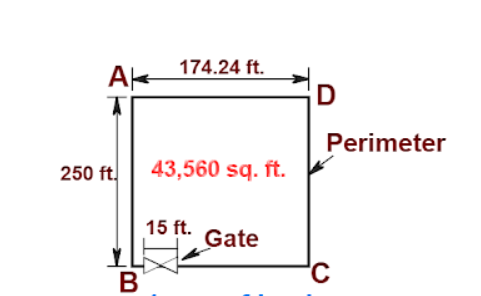
CALCULATE BOUNDARY LENGTH