
Knotted Mesh (Rama Jali) Manufacturer in India
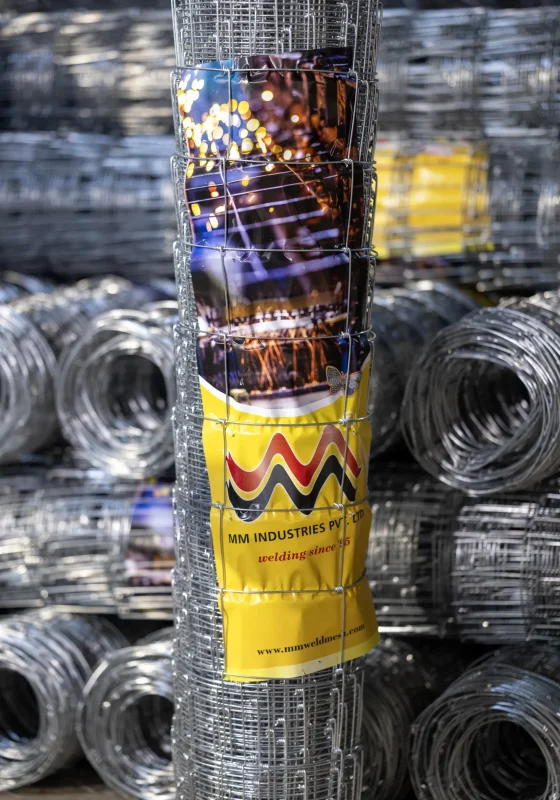
Knotted Mesh, known throughout India as Rama Jali, is a wire fence constructed entirely without welding. Each intersection of horizontal and vertical wires is secured with a separate wire knot. This design allows the fence to flex under pressure from animals, such as buffalo or nilgai, and return to its original shape, unlike welded joints that may break. Farmers, contractors, and estate owners choose knotted mesh for its durability against animals, harsh weather, and long-term neglect. It is quick to install, resists rust, and rarely needs a repair crew.
What is Knotted Mesh (Rama Jali)?
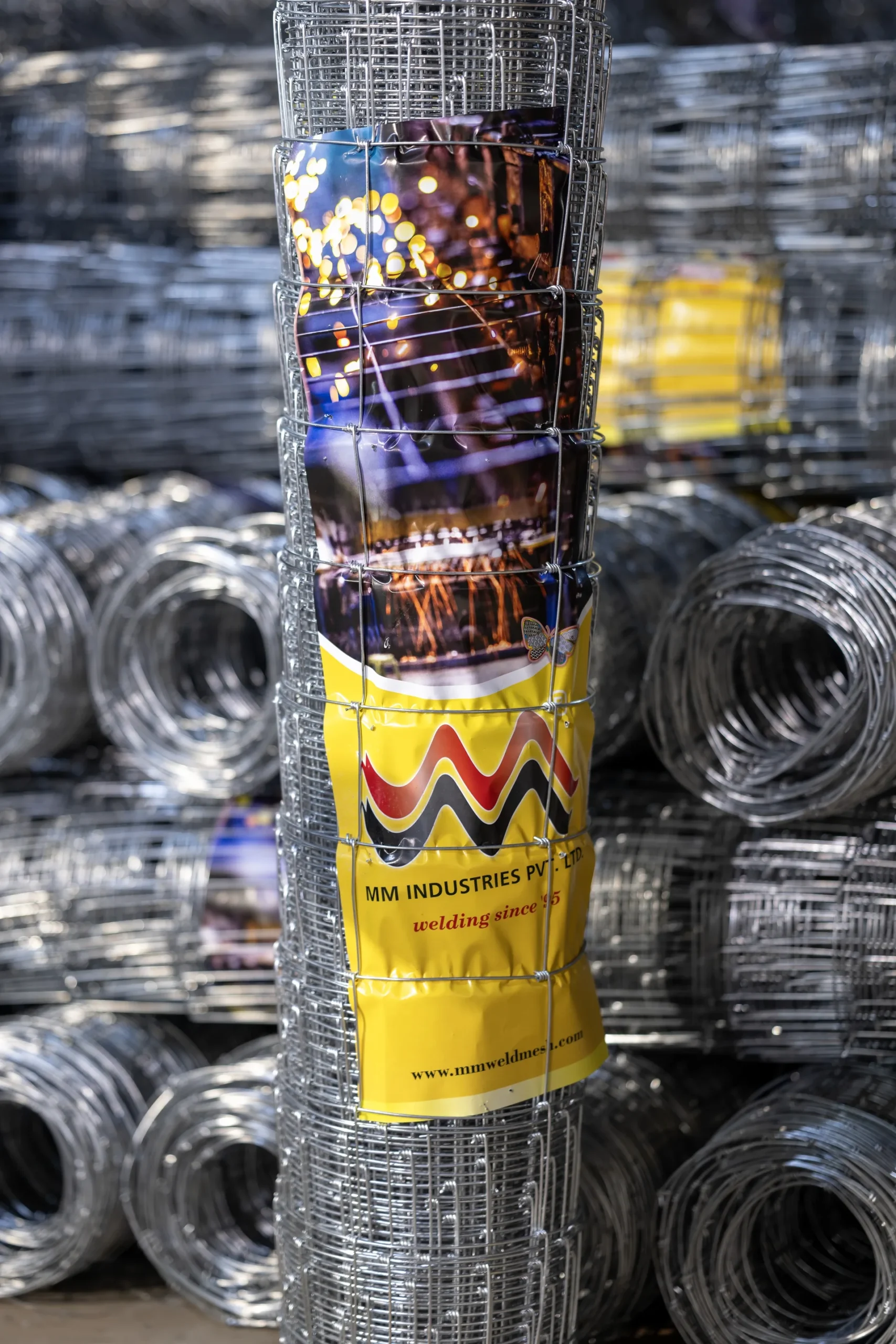
Knotted mesh (Rama Jali) is a galvanized wire fence where horizontal and vertical wires are joined by a wire knot at each intersection, rather than being welded or woven. This knot secures both wires, allowing the mesh to flex under animal pressure and return to its original shape. It is primarily used for farm, boundary, and livestock fencing.
This design differs from two other commonly confused fence types:
- Welded mesh uses electric welding to fuse wires. It is rigid and neat, but the welds can crack under repeated impact.
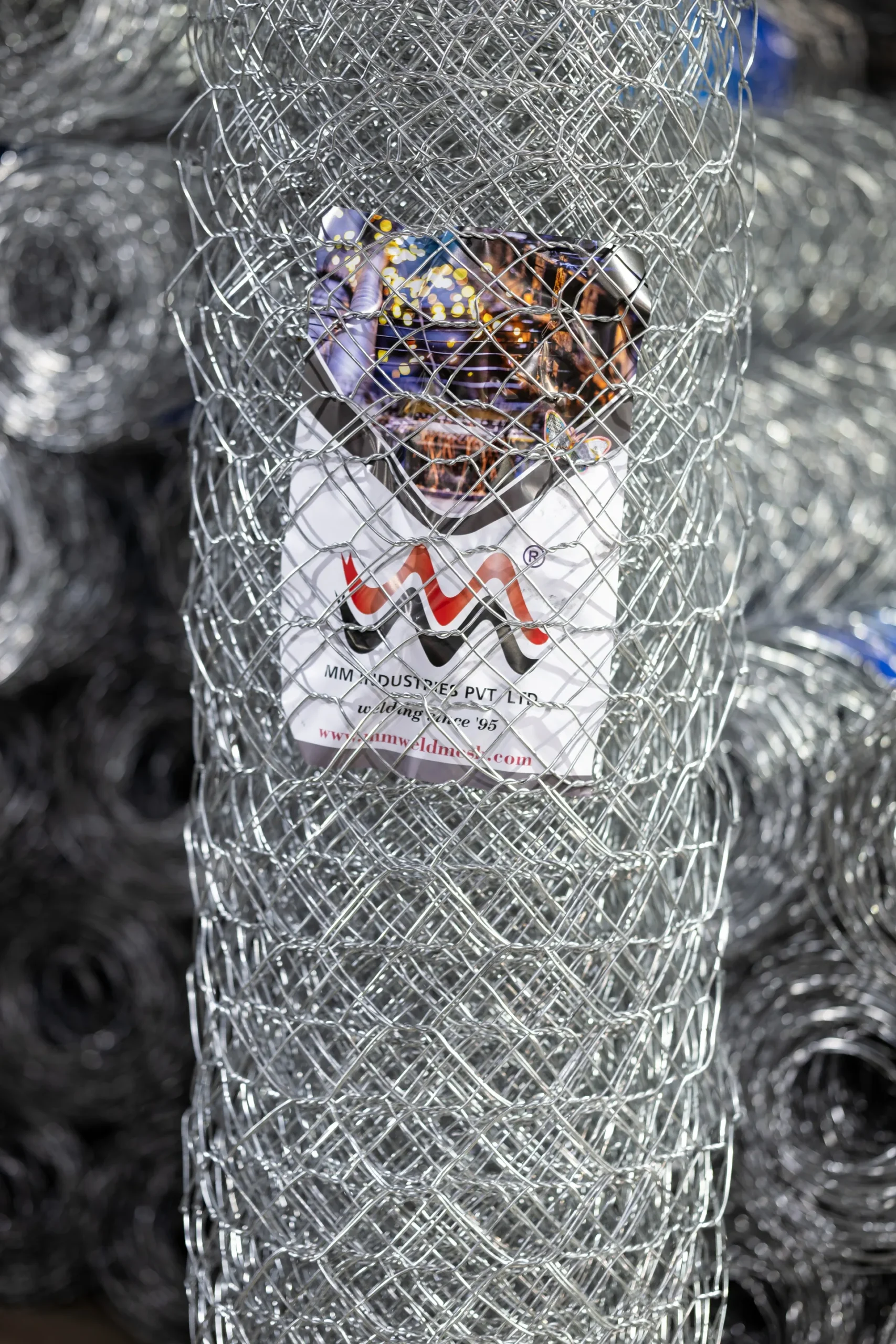
- Chain link weaves a single wire into diamond shapes. It is flexible, but the openings can distort and lack a fixed rectangular pattern.
Knotted mesh offers a balance between the two. It provides fixed, uniform openings like welded mesh, but features joints that flex rather than break. Our standard Rama Jali uses galvanized iron (GI) wire, so the zinc coating protects the steel from rust. The base wire meets IS 280 standards, and the zinc coating complies with IS 4826 for hot-dip galvanized coatings on round steel wire.
How knotted mesh works
The effectiveness of the design lies in the joint. Here are the key benefits provided by the knot.
It absorbs impact. When an animal pushes or charges, the load is distributed into the knots and the connecting wires. The mesh flexes and returns to shape. In contrast, welded panels cannot dissipate this energy and often fail at the welds.
It maintains tension over long distances. Since the joints do not slip, the mesh can be stretched tightly between straining posts, keeping the openings square. This reduces the need for intermediate posts and minimizes sagging over time.
It adapts to uneven terrain. On sloped or irregular farmland, welded panels often do not fit well. Knotted mesh conforms to the ground, preventing gaps between the bottom wire and the ground.
It requires minimal maintenance. Once installed and galvanized, upkeep involves only periodic inspections and occasional re-tensioning at the strainers. No painting or annual weld repairs are necessary.
Key takeaway: A flexible joint, tight tension, and galvanized coating result in a fence that withstands animals and weather with minimal upkeep.
Types of knotted mesh we manufacture
Rama Jali is not one fixed product. What changes is the wire gauge, the opening size, the height and the coating. These are the builds we run:
| Type | What changes | Best for |
|---|---|---|
| Standard GI Rama Jali | 2.5–2.6 mm GI wire, uniform openings, 4–6 ft | Boundary, garden, light farm fencing |
| Heavy-duty knotted mesh | Thicker gauge, heavier zinc | Cattle, buffalo, high-traffic perimeters |
| Graduated knotted mesh | Two opening sizes in one roll (e.g. 5×6 / 6×6, 6×7 / 5×7) | Mixed livestock — tighter low to keep kids/goats in, wider high for economical height |
| High-tensile knotted mesh | High-tensile wire, wider post spacing | Large estates, plantation and forest boundaries |
| Custom-height / custom-opening | Made to your drawing | Solar farms, government tenders, orchard rows |
Applications
Knotted mesh is a reliable solution for long-term boundary protection against animals or people.
Agriculture & horticulture
- Farm boundary fencing (khet ki ghera-bandi)
- Orchard and plantation protection
- Vegetable and nursery enclosures
- Crop protection against nilgai, wild boar and stray cattle
Livestock
- Cattle and buffalo paddocks
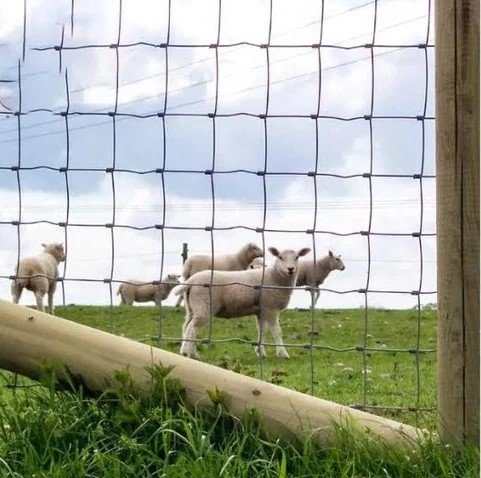
- Goat and sheep pens
- Poultry runs
- Horse paddocks and dairy yards
Infrastructure & industrial
- Solar farm perimeters
- Highway and roadside boundary fencing
- Factory, warehouse and godown premises
- Substation and utility enclosures
Institutional & residential
- Farmhouse and estate boundaries
- Government and Panchayat fencing projects
- Forest department boundary lines
- Residential plot and colony perimeters
Key takeaway: For land fencing, knotted mesh is typically recommended. For decorative or indoor applications, welded mesh is more suitable.
Features
- Knot-locked joints grip both wires securely, preventing slippage and ensuring the mesh does not unravel if a single wire is cut.
- The flexible structure deflects under load and returns to shape, reducing the risk of cracking.
- Galvanized iron corrosion protection uses a hot-dip zinc coating per IS 4826, so the coating withstands weather exposure instead of the steel.
- Uniform openings provide consistent mesh size throughout the roll, ensuring a clean and tensioned installation.
- Long service life allows for years of outdoor use with minimal maintenance.
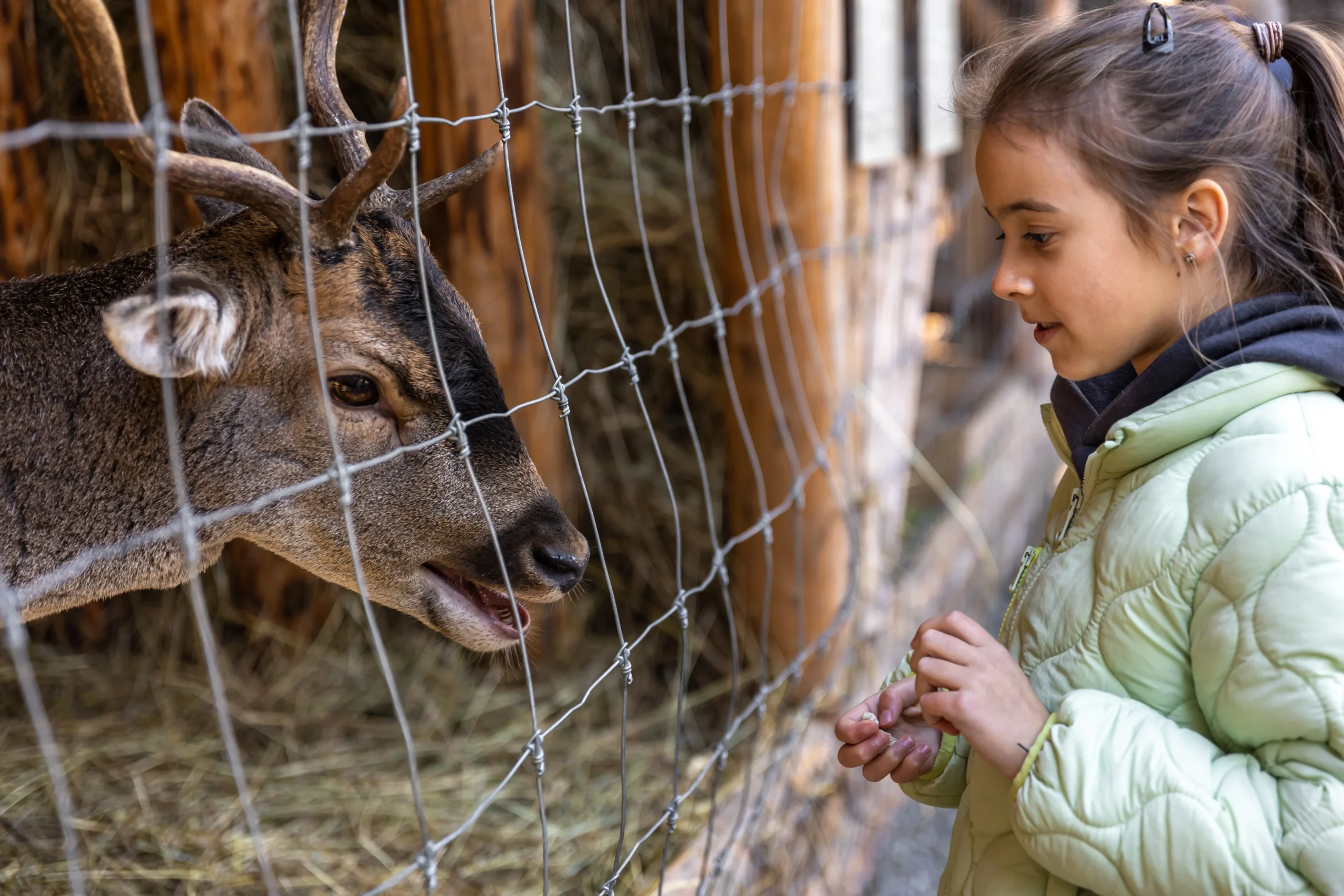
- Animal-safe — no sharp welded burrs or loose ends to injure stock.
- Quick installation is possible by rolling out and stretching the mesh between posts, eliminating the need for panel-by-panel handling.
- Lightweight construction allows one or two people to move and position each roll easily.
- Custom sizing is available, with height, opening, and gauge manufactured to your specifications.
Benefits
Features describe the product, while benefits explain the value you receive.
- Enjoy a lower annual cost over the fence’s lifespan. A durable knotted line requires minimal repairs, outperforming less expensive options that need frequent patching.
- Reduce repair callouts. The flexible design prevents damage from impacts, maintaining your boundary’s integrity.
- Complete installations faster. Rolls are quicker to install than welded panels, reducing labor costs.
- Ensure effective crop and livestock protection. A tensioned knotted line reliably keeps animals contained.
- Holds up on bad ground. Slopes and uneven farm land don’t defeat it.
- Retain asset value. Estate and industrial buyers appreciate boundaries that remain intact after five years.
Key takeaway: The true value lies in lifetime cost, not initial price. Rama Jali delivers long-term savings and performance.
Technical specifications
The values below represent our standard GI Rama Jali. Figures marked as build-dependent will be finalized based on your specific application. Please share your requirements, and we will provide exact numbers for your order.
| Specification | Detail |
|---|---|
| Product | Knotted Mesh / Grassland Mesh (Rama Jali) |
| Wire material | Galvanized Iron (GI), mild steel base wire per IS 280 |
| Wire gauge | 12 SWG and 14 SWG (approx. 2.64 mm and 2.03 mm); 12 SWG is the standard, 14 SWG the lighter option |
| Mesh openings | 4″×4″, 4″×5″, 4″×6″, 5″×6″, 6″×6″, 6″×7″ (100×100 to 150×175 mm), plus graduated openings |
| Roll height | 4 ft, 5 ft and 6 ft (approx. 1.2 m, 1.5 m and 1.8 m); custom heights on request |
| Roll length | 50 ft and 100 ft (standard); custom lengths on request |
| Weight per roll | 12–48 kg depending on opening, height, length and gauge — see the size chart below |
| Knot / joint type | Knotted (wire-locked intersection) |
| Zinc coating | Hot-dip GI per IS 4826; coating class |
| Tensile grade | Mild steel (standard); high-tensile on request |
| Finish | Galvanized (silver-grey); PVC/colour coat on request |
| Opening style | Uniform or graduated (smaller openings low, wider high) |
| Custom sizes | Yes — height, opening, gauge and length to specification |
| Packaging | Bundle Packing |
| Country of origin | India (Raipur, Chhattisgarh) |
Standard size & weight chart
All sizes listed below are standard stock builds. Roll weights are provided per roll (kg). You may order using the size code, or provide the opening, height, and length, and we will match the appropriate product.
How to read the code: Rama Jali – [opening in inches] × [height in ft] × [roll length in ft] – [gauge]. So 4×4×4×100 – 12g = 4″×4″ opening, 4 ft high, 100 ft roll, 12 SWG.
| Size code | Mesh opening (in) | Opening (mm) | Height (ft) | Roll length (ft) | Gauge (SWG) | Weight / roll (kg) |
|---|---|---|---|---|---|---|
| 4×4×4×100 | 4×4 | 100×100 | 4 | 100 | 12 | 37 |
| 4×4×4×50 | 4×4 | 100×100 | 4 | 50 | 12 | 18.5 |
| 4×4×5×100 | 4×4 | 100×100 | 5 | 100 | 12 | 45 |
| 4×4×5×50 | 4×4 | 100×100 | 5 | 50 | 12 | 23 |
| 4×5×4×100 | 4×5 | 100×125 | 4 | 100 | 12 | 33 |
| 4×5×4×50 | 4×5 | 100×125 | 4 | 50 | 12 | 16.6 |
| 4×5×5×100 | 4×5 | 100×125 | 5 | 100 | 12 | 40 |
| 4×5×5×50 | 4×5 | 100×125 | 5 | 50 | 12 | 20 |
| 4×5×6×100 | 4×5 | 100×125 | 6 | 100 | 12 | 48 |
| 4×6×4×100 | 4×6 | 100×150 | 4 | 100 | 12 | 30 |
| 4×6×4×100 (14g) | 4×6 | 100×150 | 4 | 100 | 14 | 19 |
| 4×6×4×50 | 4×6 | 100×150 | 4 | 50 | 12 | 15 |
| 4×6×5×100 | 4×6 | 100×150 | 5 | 100 | 12 | 37 |
| 4×6×5×50 | 4×6 | 100×150 | 5 | 50 | 12 | 18.5 |
| 4×6×6×100 | 4×6 | 100×150 | 6 | 100 | 12 | 44.6 |
| 5×6×4×100 | 5×6 | 125×150 | 4 | 100 | 12 | 27 |
| 5×6×4×50 | 5×6 | 125×150 | 4 | 50 | 12 | 13.5 |
| 5×6×5×100 | 5×6 | 125×150 | 5 | 100 | 12 | 33.75 |
| 5×6×5×50 | 5×6 | 125×150 | 5 | 50 | 12 | 16.875 |
| 5×6 / 6×6 ×4×100 | 5×6 / 6×6 (graduated) | 125×150 / 150×150 | 4 | 100 | 12 | 25 |
| 5×6 / 6×6 ×4×50 | 5×6 / 6×6 (graduated) | 125×150 / 150×150 | 4 | 50 | 12 | 12 |
| 5×6 / 6×6 ×5×100 | 5×6 / 6×6 (graduated) | 125×150 / 150×150 | 5 | 100 | 12 | 31 |
| 5×6 / 6×6 ×5×50 | 5×6 / 6×6 (graduated) | 125×150 / 150×150 | 5 | 50 | 12 | 15.5 |
| 6×7 / 5×7 ×4×100 | 6×7 / 5×7 (graduated) | 150×175 / 125×175 | 4 | 100 | 12 | 23 |
Reading charts: Heavier rolls indicate more wire, resulting in a denser and stronger fence for the same area. For the same opening and height, a 12 SWG roll weighs more and withstands animal pressure better than a 14 SWG roll of the same size. Smaller openings, such as 4×4, also weigh more than wider openings, such as 4×6, due to increased wire per square metre.
Download technical specifications → | Request a quote →
How Rama Jali is manufactured
All processes are managed in-house, allowing us to maintain quality and efficiently produce custom sizes.
- Wire rod selection: Steel rods are selected to the appropriate grade based on gauge and intended application.
- Wire drawing: Rods are drawn to a finished diameter of 2.5–2.6 mm or to your specified custom gauge.
- Galvanizing: Hot-dip zinc coating is applied in accordance with IS 4826, ensuring corrosion protection is integrated into the wire rather than applied afterward.
- Straightening: Drawn wire is straightened to ensure smooth machine feeding.
- Knot formation and weaving: Line and stay wires are fed together, and knots are formed at each intersection to secure the mesh.
- Quality inspection: Openings, wire diameter, coating, and knot integrity are verified against order specifications.
- Rolling and packaging: Mesh is rolled to the specified length, securely bound, and prepared for transport.
- Dispatch: Orders are loaded for delivery across Chhattisgarh, Madhya Pradesh, Odisha, and throughout India.
Key takeaway: In-house drawing, galvanizing, and weaving ensure that one factory manages quality throughout the process, and custom orders are not outsourced to subcontractors.
Knotted mesh vs chain link fence
Both types are commonly used for farm and boundary fencing, but they serve different purposes.
| Structure | Fixed rectangular openings, knot-locked | Woven diamond mesh |
| Strength under animal load | Higher — spreads load through knots | Moderate — diamonds distort |
| Flexibility / impact recovery | Flexes and returns to shape | Flexible but deforms permanently |
| Opening stability | Stays uniform | Can pull out of shape over time |
| Installation | Rolls out, stretches between posts | Rolls out; needs top rail/tension wire for a clean line |
| Cost | Comparable; value over life | Often lower upfront |
| Agricultural suitability | Very good for boundaries and stock | Good for security/compound walls |
| Lifespan | Long with GI | Long with GI |
| Maintenance | Low | Low–moderate |
Knotted mesh vs chain link fence
| Factor | Knotted Mesh (Rama Jali) | Welded Wire Mesh |
|---|---|---|
| Joint | Wire knot (flexes) | Electric weld (rigid) |
| Impact resistance | High — knot absorbs the hit | Lower — weld is the failure point |
| Behaviour on rough ground | Conforms to contour | Panels leave gaps on slopes |
| Repairability | Local re-tension, no spread | A cracked weld can run |
| Appearance | Field/boundary look | Clean, precise, grid look |
| Best for | Farm, boundary, livestock | Grilles, cages, precise industrial panels, RCC reinforcement |
| Cost | Comparable | Comparable |
| Security | Good | Good (rigid panels resist cutting) |
Where each wins: welded mesh for anything that needs a rigid, precise panel indoors or for reinforcement. Knotted mesh for a flexible boundary that lives outside and takes knocks.
Knotted mesh vs chain link fence
| Factor | Knotted Mesh (Rama Jali) | Welded Wire Mesh |
|---|---|---|
| Joint | Wire knot (flexes) | Electric weld (rigid) |
| Impact resistance | High — knot absorbs the hit | Lower — weld is the failure point |
| Behaviour on rough ground | Conforms to contour | Panels leave gaps on slopes |
| Repairability | Local re-tension, no spread | A cracked weld can run |
| Appearance | Field/boundary look | Clean, precise, grid look |
| Best for | Farm, boundary, livestock | Grilles, cages, precise industrial panels, RCC reinforcement |
| Cost | Comparable | Comparable |
| Security | Good | Good (rigid panels resist cutting) |
Where each wins: welded mesh for anything that needs a rigid, precise panel indoors or for reinforcement. Knotted mesh for a flexible boundary that lives outside and takes knocks.
Knotted mesh vs welded wire mesh
| Factor | Knotted Mesh (Rama Jali) | Welded Wire Mesh |
|---|---|---|
| Joint | Wire knot (flexes) | Electric weld (rigid) |
| Impact resistance | High — knot absorbs the hit | Lower — weld is the failure point |
| Behaviour on rough ground | Conforms to contour | Panels leave gaps on slopes |
| Repairability | Local re-tension, no spread | A cracked weld can run |
| Appearance | Field/boundary look | Clean, precise, grid look |
| Best for | Farm, boundary, livestock | Grilles, cages, precise industrial panels, RCC reinforcement |
| Cost | Comparable | Comparable |
| Security | Good | Good (rigid panels resist cutting) |
Where each wins: Welded mesh is for anything needing a rigid, precise panel indoors or reinforcement. Knotted mesh suits a flexible boundary outdoors that takes knocks.
Buying guide: how choose right knotted mesh
Eight decisions, in the order they actually matter:
- Animal type. Poultry and goats need smaller bottom openings. Cattle and buffalo require height and a heavier gauge. Wild-animal exclusion (nilgai, boar) requires both height and tension.
- Wire gauge. We make two: 12 SWG (≈2.64 mm) and 14 SWG (≈2.03 mm). 12 SWG is the workhorse for boundary and farm runs and withstands cattle and estate perimeters. 14 SWG is lighter and cheaper for garden and low-pressure lines.
- Mesh opening. Smaller openings (100×100) contain smaller stock and resist push-through. Larger openings cost less per running foot when used only for boundary marking.
- Roll height. 4 ft for boundary and small stock. 5 to 6 ft where excluding jumping or wild animals.
- Galvanizing. Always GI for outdoor use. Ask for the heavier coating class if near coastal or high-humidity conditions or to maximize life.
- Fence posts. Use GI pipe, angle iron, or precast RCC posts for permanent runs. Use Y-posts or T-posts for faster, lighter installs. Match post spacing to your gauge and tension.
- Terrain. Flat land is forgiving. For slopes and undulating farmland, knotted mesh’s flex is a real advantage. Plan your straining posts at grade changes.
- Project size. For large runs and tenders, buy custom lengths and confirm delivery schedules upfront.
Common purchasing mistakes to avoid:
- Buying the thinnest gauge to save money, then replacing it in two years.
- Skipping galvanizing on an outdoor fence.
- Under-specifying posts, so a good mesh sags on a bad frame.
- Ordering standard openings when graduated spacing would have done the job cheaper.
Key takeaway: decide on the animal and the terrain first. Gauge, opening and height follow from those two.
Why should choose MM Industries For Knotted Mesh?
- Over 30+ years since 1995. One of Central India’s established wire mesh and fencing manufacturers based in Raipur.
- We introduced Rama Jali to India in 2018. We originated and named this knotted mesh in the Indian market. The product came from our floor first and demand followed.
- In-house manufacturing. We draw, galvanize, and weave under one roof so we control quality.
- Consistent quality. Base wire to IS 280, zinc coating to IS 4826.
- Bulk capacity. Built for large farm, industrial and government orders.
- Custom manufacturing. Height, opening, gauge and coating to your drawing.
- Fast delivery across Chhattisgarh, Madhya Pradesh, Odisha and pan-India.
- Dealer network and technical support to spec the right fence before you buy.
Frequently Asked Questions
Related Products
CALCULATOR
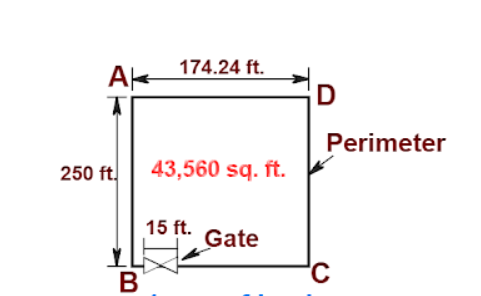
Calculators to estimate welded mesh weight and fencing boundary length based on your requirements.
BOUNDARY CALCULATOR
CALCULATE BOUNDARY LENGTH